Travelogue Cyprus 5: Limassol

LIMASSOL

13 – 16 April 2024

We had the main event of our trip right at the end. Said event was a half marathon, so it was a touch counter-intuitive after all the feasting and festivities in the warm-up fortnight.

That said, Saturday’s tasks were to get from Paphos to Limassol (where the race would be held the next morning), get our race packs and try stay off our feet and as well rested as a holiday weekend would allow.

Luke and I did a morning jog along the Paphos promenade as a warm-up and to get a photo of the Castle at the end of the Port that had proved elusive in our sightseeing. Alex and Chris went on a different, but equally important, mission to Starbucks to sort out their caffeine fix and to the supermarket to get bread, cheese and ham to make toasties… which Alex was already busy doing when Luke and I arrived home.

Very sorry to say goodbye to our fantastic holiday house, we set off to explore new places.

Chris had planned our route to take us past Aphrodite’s Rock and through the town of Pissouri. Snaking and climbing through the narrow streets of the latter got us to a viewing point that offered a spectacular panoramic view of the coastline below.

It was a bit of a culture-shock pulling in to Limassol, which was by far the biggest city we’d seen on our travels. Cresting a hill on the outskirts revealed a sprawl of buildings hugging the coast as far as the eye could see. With a population of 154000 compared to Paphos’s 35000, it certainly felt like we’d arrived in the big smoke (although still nothing compared to Johannesburg’s 6 million!)

We had chosen our apartment for its location, an easy walking distance from the Limassol Marathon start line in Molos Park.

It took some doing to find the building in the narrow streets and one-way roads that satellited from the main road that ran alongside the promenade and that housed our entrance. Once we’d honed in on it, finding parking was another story!

We needed to go get our race numbers anyway, so did a very quick bag drop-off and kept moving.

Who should we bump into at the ticket office? The entire UK contingent (Alex and Luke’s Bootcamp buddies) who had also come to collect their tickets. We’d told Chusa and Lee we would wait for them (they had come from Paphos on the bus), so the whole extended group made ourselves comfy in the lounge area under the marquee to be the welcoming committee and got group photos to commemorate the occasion.

We decided on a late lunch at the marina, so dropped off Chusa and Lee at their apartment (about 800m from ours) and then succumbed to a paid parkade a couple of blocks inland from us so we knew our car would be safe – and accessible the next day if we needed it since our area would all be blocked off for the race.

Once our party was reunited, we walked along the promenade to the marina. Chusa and Lee had been to Limassol 6 years prior (also for the marathon) so had a traditional taverna in mind.

We were marginally waylaid as we encountered the Colchester Boot camp crew, who had established Drink Camp on the terraced steps at Ventuno Aperitivo on the Square at the Old Port. Katie had commandeered a hobby-horse of sorts and was cantering up and down in front of her jeering buddies. We checked in briefly, before making a concerted effort towards lunch.

Time had only done Kipriakon taverna proud and we all committed to the traditional menu, with Moussaka (aubergine bake), Pasticio (oven-baked pork and bechamel pasta), and Tsavas (lamb and onion stew) being the order of the day.

We had told the Boot Camp crowd that we would meet them after our meal, but since we had languished somewhat, they were already gone when we passed back through the square.

Either Limassol is a small world, we were predictable or fate intervened, but we still ended up passing them en route back to our neck of the woods… Where we had already set our sights on an Irish bar called Rums Pub, so we passed pleasantries as each headed in the opposite direction.

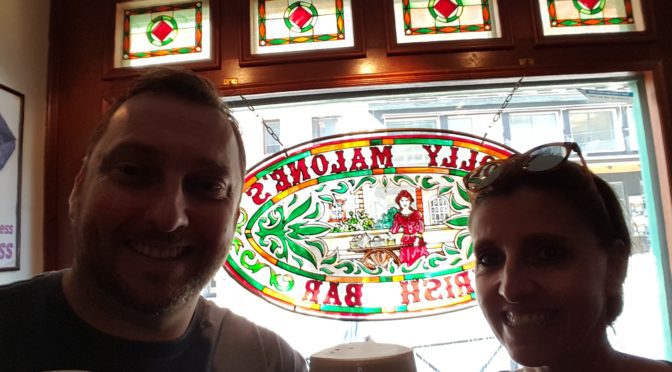
With a big race the next day, we took it very easy and nursed a Guinness to within an inch of its life while chatting with our mates. We also didn’t want a heavy meal or a long night in a restaurant to contend with, so Alex made the suggestion that we ‘carbo-load’ with 2-minute noodles at our apartment, which was pure genius!

So much for being ‘off our feet’; we had almost 20,000 steps clocked!

SUNDAY

And then it was Race Day!

We were up at the (relative) crack of dawn, each observing our own prep protocol. Then it was off to the Cafe Nero across the road to meet our race buddies and walk slowly and gently to the start line.

I took my place in Block 1, waiting for the starting gun… BANG! We were off.

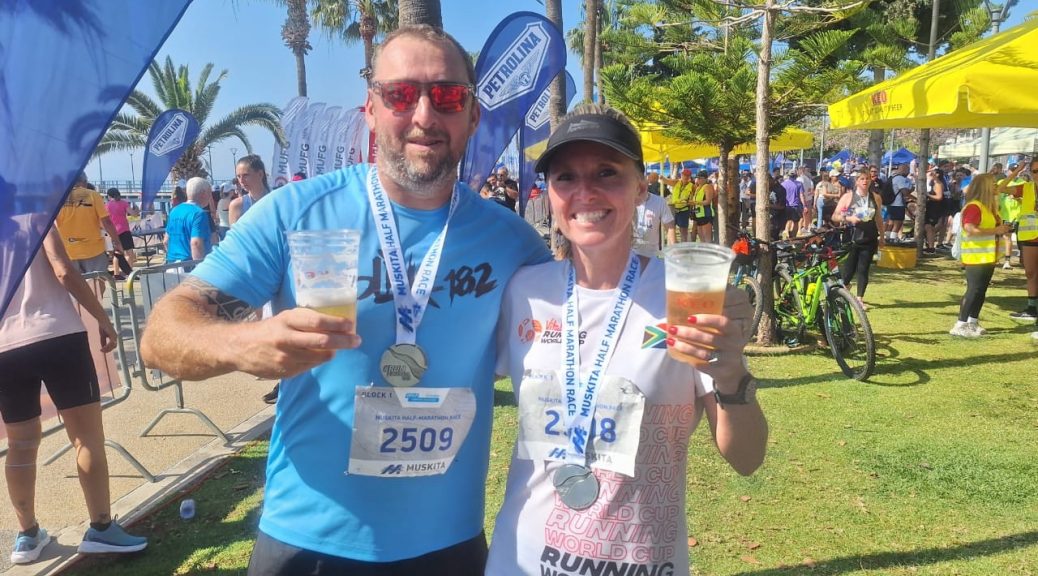
Left, right, left, right, look at the scenery, grab a water bottle, left, right, left, right. It was a long 21km! With sea-level air and a flat there-and-back course on our side, both Chris and I set a Personal Best on the course. Hooray!

Since some of the Colchester Boot Camp squad had run the 10km and finished before us, it was fabulous to have a welcome committee at the finish line to cheer us in. They were a spirited crew, so even though we had only known each other for a matter of hours, they cheered like we were old friends.

Once our group had gathered, we took time to return to our apartment (since it was so conveniently across the road) for a toilet stop, shower and change, and then it was off to lunch.

Everywhere was busy. There were still Limassol Marathon runners on the field so the roads were still closed and the promenade blocked off for participants approaching the finish line. A band had struck up on the Old Port Square, and a crowd was starting to gather with jubilant finishers celebrating their achievements.

We scored because the Boot Camp crew had once again assumed the position on the same terraced steps we had met them on the day before. With the size of their group, we were easily able to pull up chairs, share war stories about our race and commiserate about the tricky bits on the course.

Hunger will out though, and we had to leave our thirsty friends behind in order to refuel our very-empty tanks.

Being Sunday and with all the extra race traffic, the lunch sitting was full to bursting along the whole marina. We were very lucky to catch the eye of the host at the same spot we had lunched the previous day and he made a plan to bring an extra table into play for us. It meant that we had half of us in the sun and half enjoying the shade at any point – and we tried to circulate so nobody got too fried.

With a second go at the all-round-tempting menu, we were able to sample the halloumi ravioli, calamari and the biggest pork chop you have ever seen! It reached from end-to-end on my rectangular plate, gently cupping my chips and sauce above its shiny smile shape.

The service wasn’t great because the restaurant was so busy so we were there much longer than planned. And really needed to get a bit of a walk-around in before our tired legs seized and said that they could not!

Moving inland, we did an explore of the Old Town. There was a medieval castle surrounded by cafes, bars and restaurants that we probably should have lunched in, had we had the energy for risk-taking on our earlier forage.

Always game, the troops found space for an ice-cream and we soaked up the atmosphere from a park bench in the middle of the action before retreating to our respective quarters for some downtime after a very long day.

Our regroup for dinner was at the Limassol Agora food court in the original market in the Old Town. With a broad selection of street food stalls and a variety of entertainment options, it sounded like ‘something for everyone’.

However, it was very noisy and we were beyond shouting at each other to be heard, so we swiftly moved on.

I had spotted a locals souvlaki take-away that scored off the charts on Google Maps. Since it had a dine-in area attached, we figured it was worth a shot. We ordered a broad selection off the menu at Souvlaki Livadeias and ate like kings at a fraction of the cost of a high street restaurant equivalent. We vowed to try copy the roasted feta parcel on the braai when we got home!

MONDAY

There was so much pressure on our last day to live up to all the antics and adventures of the rest of the trip.

Alex and Luke had requested some beach time, to make the most of the sunshine which was not as commonplace on their side of the pond as on ours. So Chris planned a bit of a road trip that would take us to some nearby beaches with a few stops along the way.

The first was The Cyprus Wine Museum in Erimi. We had sampled so much local wine over the course of our trip that it seemed prudent to add the theoretical education to our practical one.

The custodian seemed surprised to have customers and scurried from her feet-on-desk position to open the entrance doors for us.

She gave us a brief running order for the tour, where she would give us an intro and overview, then orientate us to the two rooms of exhibitions, then set away an 11 minute video for us to watch before taking us to the cellar where we could taste one wine for €5 or the range for €10.

The exhibits told the story of the value of wine to Cyprus, allegedly being the birthplace of wine in the form of its sweet Commanderia variant. The wine was so envied that it made Cyprus the target of invasions by the various global-domination empire-builders across history.

The video was awful. 11 long minutes of PowerPoint presentation with slides of artefacts like clay wine pots animating in and out to grossly mismatched ominous piano music. We giggled as we tortured ourselves to complete the show so as not to insult our hostess.

Sapped of the will to wine – and since we hadn’t yet eaten – we skipped the tasting and moved on to Kourion Beach.

By now starving, we settled at a deck table at the quite-swish Chris Blue Beach restaurant to enjoy the beach view over a lovely lunch, which we then settled with some downtime on the sand and frolicking in the sea.

We had discovered on the map that there still existed two British enclaves on the island, as agreed in 1960 when Cyprus got independence. We had missed the one in Famagusta when we’d visited Nicosia, but could still get bragging rights for a flit to the UK by visiting the peninsula near Limassol.

Taking the opportunity en route back from the beach, we drove through the sovereign area. From the swathe of pylons and telecoms lines, it was clear that this base was used for surveillance. With Cyprus being so close to the Middle East, there were a couple of likely suspects of whom that might be at any given time.

We would not be getting mixed up in all of that though; we would be crossing a Salt Pan to get to the Lady’s Mile beach.

With no actual road, Chris deftly navigated between the orange cones that – we presumed – indicated the preferred route on the golden sand. The water in the salt pan was twinkling on our right, bright cyan from the shallow highly salinated water. The sea was directly in front of us, with the Limassol shoreline on the horizon. We could clearly cross-reference the landmark highrise buildings to spot (more or less) our proverbial neck of the woods.

Last tourist stop on the agenda was a visit to the blue flag beach at the far end of the Limassol promenade. We hazarded a guess that we had run close to there the previous day… but there was no way we’d manage it on foot two days in a row!

We made the most of the warm late afternoon sun lazing on towels on the soft sand and then celebrated the sunset with a sundowner on the terrace restaurant.

Our last supper choice had been an obvious one. A fabulous restaurant called Meze that we had all noticed on our way into town and that scored very highly on Google. It was also conveniently two blocks from our apartment, so an easy walk on stiff legs.

We invited Chusa and Lee – who had gone on a day tour to Nicosia – to join us, so we could swap stories about our respective adventures.

Meze was, obviously, a specialist in meze-style meals which comprise of several small dishes that are shared by the table. We were served warm pita bread with little bowls of olives, peppers, hummus, tahini, tzatziki and so on… and then more dishes with grilled lamb souvlaki and chops… and then a selection of sausages… and then crumbed and deep-fried haloumi with buttery grilled mushrooms… the food just kept coming!

By the time the waiter finally announced that he was serving the last dish – a crunchy syrupy dessert course – we thought we would burst!

Fortunately the restaurant wasn’t in any rush to push us out the door, so we had time to sip it wine and let the enormous meal settle a little. While making the most of our last memory-making Limassol moments together, giggling and happily snapping last photos.
Travelogue RWC 2023 4: Marseille / La Ciotat

MARSEILLE & LA CIOTAT

29 Sep – 02 Oct 2023

Our drive from Montpellier to Marseille was particularly festive because Chris had prepared a playlist of Blink 182 songs. This was intended to warm us up for the impending concert we would be attending on the last night of the trip. He’d based it on the set list of one of the previous concerts on the same tour, so it was a good indication of what we could expect!

We chatted and sang along, admired the countryside and the little towns dotted on either side of the motorway. Chris gave accolades to the sensible toll system that dispensed a ticket at origin and then tailored the charge for you when inserting the ticket again at your destination toll booth. All fully automated, super-efficient and a fair fee for just the value you’d enjoyed on the perfect roads.

Arriving in Marseille’s St Charles Station, we completed our Awesome Foursome group as we reunited with Michele, who had emigrated to London some 6 months prior.

We put the 30 minute train journey to La Ciotat to good use, catching up on what had been happening on our respective ends of the ocean.

Robbie had recommended our stay in the seaside town just outside of Marseille based on a previous visit he’d made to his friends who lived there. One of the friends, Ricky, was even at the train station waiting to greet us. He packed all our suitcases and selves into his station wagon with a smile.

He dropped us at our Airbnb apartment, in prime location one road in from the seafront, with the new town to the left and the old town to the right.

Our apartment was quite mysteriously architected, opening into an ample dining room / kitchen combo with 2 mismatched arches at the back leading to a twin room and lounge that in turn led to a slender bathroom at the back. Chris and I would be staying upstairs, accessed by narrow steep wooden steps on the right of the dining room into a loft that required us to crouch from the waist because the roof was so low. It was quite entertaining trying to figure out how this apartment had been constructed – or deconstructed from its neighbours.

Slip-slops on, we hit the beach. It was very pleasant to enjoy the warmth of the late afternoon sun while soaking in the glistening sea with all the yachts and sailboats bobbing along merrily. The beach was soft sand that you could see disappear into the clear waters.

We were easily able to walk the manageable couple of kilometres on the new town side, and rewarded ourselves with cocktails and cold beers in the tented shade of a sidewalk restaurant at the far end.

The return journey saw us overshoot our house to go onto the old port side. Also lined with bars and restaurants, we couldn’t resist going into O’Bullrock to gauge the price of a local Guinness. The usual €8 was marginally less shocking but no less frightening as we acclimated to life in Euros!

Hopelessly distracted from our French Seafood dinner mission by a few pints and a cheeky charcuterie board, we somehow ended up back at our house having a picnic and tucking into our supplies of sparkling and red wines instead.

Arrangements had been made to meet up for the 9pm Italy vs New Zealand game. We made our way back to O’Central in the Old Port (no more than a couple of hundred metres from our house) and arrived just before Ricky, his lovely wife Marjorie and their friend Marine. Clearly regulars, the owner moved people from the rockstar front tables to make space for our group.

The Kiwis easily took the game, so we decided on pizza for our midnight snack to commiserate Italy’s beating. The Crown Pub had an adjoined annex still serving fresh-from-the-oven pizza. A few minutes later we were happily munching on fresh crusty pizza with lavish portions of ham and pepperoni on top.

SATURDAY

Chris had booked us on a Marseille free Walking Tour with the same company as we’d had in Montpellier. Ricky arranged a black van taxi to come and collect us and drop us off in town to minimise the guesswork under pressure to meet for the excursion.

We met Angie (and about 50 of her guests) at the Metro Station at the fish market. It was very noisy next to the Rugby World Cup Fanpark, so we set off on our way as soon as Angie was happy the group was complete.

According to Angie, Marseille is the oldest city in France – some 2600 years old – and was founded by traders from Greece who pulled into the port to escape the infamous Le Mistral which brings up to 80kmph winds.

We properly started the tour at the Greek ruins. There are very few remains from its early history because, as a sought after trading point in the Mediterranean, it’s seen more than its fair share of conflict. Consequently, the city has been destroyed and rebuilt countless times by conquerers and settlers.

The point where we were standing had actually been part of the original port which the Greeks had built, with city wall and towers. Further, Grand Rue is the oldest street in France, which you can still walk down today. Authentic Starbucks ‘n all.

Moving along the road, Angie shared how Marseille was rebuilt into 1851 under Napoleon in order to insert a sewerage system, widen roads (for lifestyle and army access) and trees to line the roads. And, most importantly, connecting the old port with the new port, required to manage the volumes of traffic now coming to Marseille. Having struggled with epidemics like Black Plague and Cholera, the buildings were built with lots of long high windows to maximise light and ventilation.

Not all the stories were of glory and progress though.

During the Second World War, the Vichy Government collaborated with the Nazis in the form of an agreement that the south of France would remain free while the North was occupied. However, once the Allies collected in North Africa with intention to enter Europe via Marseille, the Germans broke the agreement and moved down to the city to defend the territory that they had gained.

Marseille was a cesspit and known as the Sty of Europe. In January 1943, by way of collaboration with the Nazis a large troop of French policeman cleared all the residents out of their houses – some 20 000 people – and gathered them on the port. The majority were trained to a transition camp for a week. A couple of thousand (mostly Jewish) people were taken to Poland and executed. The few that returned arrived back to rubble; the policeman had blown up 1500 buildings with dynamite as a radical solution to clean up the city. Only 7 buildings remained standing. This has been recognised quite recently as a Crime Against Humanity.

One of these surviving buildings, a beautiful old Renaissance structure built in 1535, was actually slowly (very slowly, over 3 months) moved 10 metres and pivoted 90 degrees in order to better fit the new city planning for Grand Rue!

Modern Marseille has been depicted as a dangerous place. While it has had a notorious criminal element from as far back at the 1950s (‘The French Connection’) there had been a concerted effort in the last decade to clean up the city and restore a more attractive connotation.

There are than 2000 Pétanque strips around the city – and even a nightclub that has 7 Pétanque strips inside where ravers can exercise their one arm with the boules and the other with Pastis.

Marseille is also famous for its olive oil soap, crafted since the Middle Ages. Constituting 72% olive oil, it is traditionally presented as an unscented cube in the natural olive green colour. The soap is supposed to be all you need to keep your skin clean, youthful and hydrated. Angie (who couldn’t be more than 30 years old) joked that it was all she, as a 72 year old, had been using for the last 50 years.

Concluding the tour at the majestic Byzantine Cathedrale de la Major, we broke from the group to grab some lunch. All 4 of us had earmarked the same place for different reasons as we’d walked past so it was an easy choice.

We had a veritable feast of local-flavoured goodness. Charcuterie boards to start, with salmon tartare and tuna steak for mains. Lots of fresh baguette and butter too, of course. We’d earned it, having done a good few kilometres in the baking Mediterranean sun on this perfect day.

Marseille was heaving with all the tourists and rugby fans in for the weekend, so we decided to head back to our neck of the woods for a slower pace. Public transport is easily accessible and inexpensive so catching the train back to La Ciotat and connecting with a bus to drop us off at our door was a lot simpler than expected and cost less than 5 Euros apiece.

Somewhere along the way we uncovered that Robbie had never had a Katemba; a refreshing mix of equal parts Coca-Cola and red wine. We popped into our local supermarket to get some Coke and the cheapest red wine available. Less than 20 minutes later, another First was chalked up on our adventure scorecard!

Keen to make the most of the sunshine, Michele and I grabbed our flops and went for a walk along the promenade to dip our toes in the sea. Such a beautiful stretch of coastline and the perfect time of day, with sun on our backs and clear cold water on our legs.

The chaps meantime were watching Fiji vs Georgia. We’d managed to miss most of the match by the time we got back at sundowner o’clock.

Tucking into a selection of cold meats, we sipped on some of the nicer red wines (sans Coke) that we’d brought from Beaujolais. Never short of conversation, we shared stories and laughs around the kitchen table for hours in our homely home.

Time, in fact, ran away with us and we were caught by surprise when Ricky and Mark arrived at our front door to ‘pick us up’ (on foot) to go watch the Scotland vs Romania game at the pub.

Resuming our positions in our now-local O’Central, our group delighted as their home nation team easily took the game from the Romanians. The Scots went on to celebrate into the early hours of the morning while the Saffas went home to get a good night’s sleep in prep for the big game the next day.

SUNDAY

It had been a long week of festivities and we were glad we’d left the Sunday open, as a free day with no arrangement.

Chris and I went out for a morning run and saw there was a market open all along both ports. The streets were buzzing with vendors and shoppers. Noting there were a lot of clothing and accessory stores, I encouraged Michele to do a return visit with me assuming it would be of little interest to the chaps.

We ambled along, browsing the silky cottons, light wools, fluffy angoras and soft leathers. The clothing stalls were punctuated with food vendors encouraging us – me with little resistance – to sample their meats, cheeses and Mediterranean accoutrements. Delicious!

Lured out by the taste for a coffee, Chris and Robbie had settled at the local Tabac and were sipping on espresso. Admiring the yachts and watching the day go by, we unfolded our plan for the afternoon.

Far from ambitious, we picked a seafront seafood restaurant and had spectacular salmon and cod fish ‘n chips. This left enough time to get dressed and take the patio furniture out onto our stoep to share the last of the wine while we waited to be collected at 5 to go to Marseille for the rugby game.

Marjorie collected us and as an avid rugby fan was very excited to be attending the game with our South African contingent for authenticity. She chatted animatedly as she drove, pointing out things of interest as we passed. She had grown up in La Ciotat so had lots of interesting information to share.

Marseille was pumping! There was a sensory-overload of activities; French pub anthems booming out of speakers, people everywhere, beer flowing, flags flying. It was strange (and awesome) to see so many Springbok shirts in the hordes of people streaming up and down the Main Street that led up to the Stadium.

We knew of a few people that were also attending the game, one such a friend from Joburg who had emigrated the year before and now lived in Manchester. We’d been messaging back and forth over the weekend in an attempt to catch up but our paths had not yet crossed. This was our time!

We found Justin and his friends outside the Stadium and spent the next couple of hours together, reminiscing with our old friend and making new memories with the new ones.

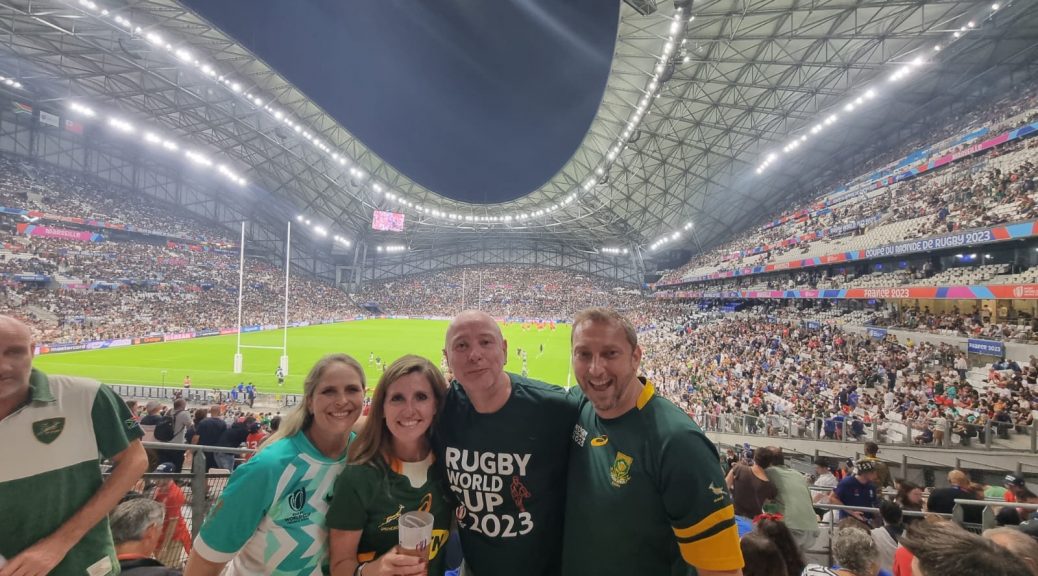
Stadium access was very well organised and it was a pleasure to share the South Africa vs Tonga experience with 59996 the other spectators the Stadium was designed to hold. Sitting next to a Frenchman who was wearing an old Boks jersey, I managed to practice a little of my French as we exchanged stories of how he’d come by his jersey on a trip to SA and what my friends and I were going in France.

Cherry on the cake was our team winning the match and getting the bonus point required to move us closer to being promoted from our group into the quarter finals.

Travelogue N. Ireland 3: Derry & Enniskillen

DERRY & ENNISKILLEN

15 March 2023

Driving in from Bushmills and with only one night in Derry, we prioritised convenience and location for our choice of hotel. The City Hotel, on the banks of the River Foyle and with its view of the Peace Bridge, was perfect for our purposes.

Arriving around lunchtime, our room wasn’t ready yet, which was no problem as we had to speed off to our walking tour anyway. We dashed across town, and met our tour guide, Pat, a few minutes into his intro speech. 

He was telling the group that the name Derry derives from the old Irish word for Oak Grove, and that the original Oak Grove and its settlements were all located on a small hill, which was formerly an island in the River Foyle.

Turns out that he was responding to a common question “is the town called Derry or Londonderry?”; a short question with a long and complicated answer.

From 1541, when Henry VIII became King of Ireland, the English crown steadily sought to assert its control over Ireland.

From the 1550s, areas in the south and west of Ireland were planted with English settlers in the hope of establishing colonies and ‘taming Ireland’s most unruly provinces’.

This ‘plantation’ – newly planted citizens who were given land that often saw Irish farmers losing the land that they’d been working – had changed Ulster (the province that houses the 6 counties that make up Northern Ireland as we know it) beyond recognition.

In the space of a generation they had seen their social order crumble, their culture decline, their religion come under attack, and the landscape radically altered. Although 30,000 British planters had come to Ulster, they had not not been successful in displacing the native Irish in converting them to Anglicanism. 

Part of the Plantation budget was used to secure the town, which had now been renamed from Derry to Londonderry. Construction of the city’s walls began in 1613 and was completed in 1619 at a cost of £11,700. This was a mammoth sum back then!

The walls were designed to cope with recent advances in warfare, particularly the introduction of artillery. Ten metres wide, they consisted of an eight metre thick earthen rampart built with soil, dug from an encircling ditch, and clad with another 2m deep stone face. This meant that even if the outer wall was hit with cannon fire, the compacted earth still provided solid defence AND there was still the second inner stone wall to deal with even if there was time to wreck the outer wall and tunnel the earthen filling. Proper solid!

The walls contain four gates with rectangular towers rising above the city walls. The city within was laid out in a grid pattern at the centre of which was an open air diamond shaped meeting area (what would be the town square, in essence).

The walls were in astoundingly good condition for having stood for more than 400 years and the only adjustment that has been made in modern times, is to lay tarmac on top of the compacted dirt so that the wide walkway is no longer muddy and is more convenient for everyone to enjoy. We had been walking slowly along the wall from one Gate to another as Pat pointed out things of interest and historical significance.

The bulk of the story tells of the endless wrangles between the Protestants and Catholics. The second half of the 1600s was one of the bloodiest eras in Irish history, including the 105 day siege of 1689, where the Protestants closed the city doors, not only leaving the Catholics on the outside of the wall, but also having to wait them out without starving.

Similar standoffs continued to rage right until The Troubles in the late 20th century. There are still living relics, reminding us how recently this struggle happened in Derry. There are still high metal nets dotted along the walls, designed to protect some of the historically significant buildings that were the regular target of petrol bombing from other factions.

Concluding the tour, we went into the Guildhall, which is a free-access exhibition that tells the history of the town of Londonderry, with fun interactives. It also displays John Hume’s awards; the only person to have received the Nobel, Martin Luther and Gandhi peace prizes for his role in orchestrating the peace treaty.

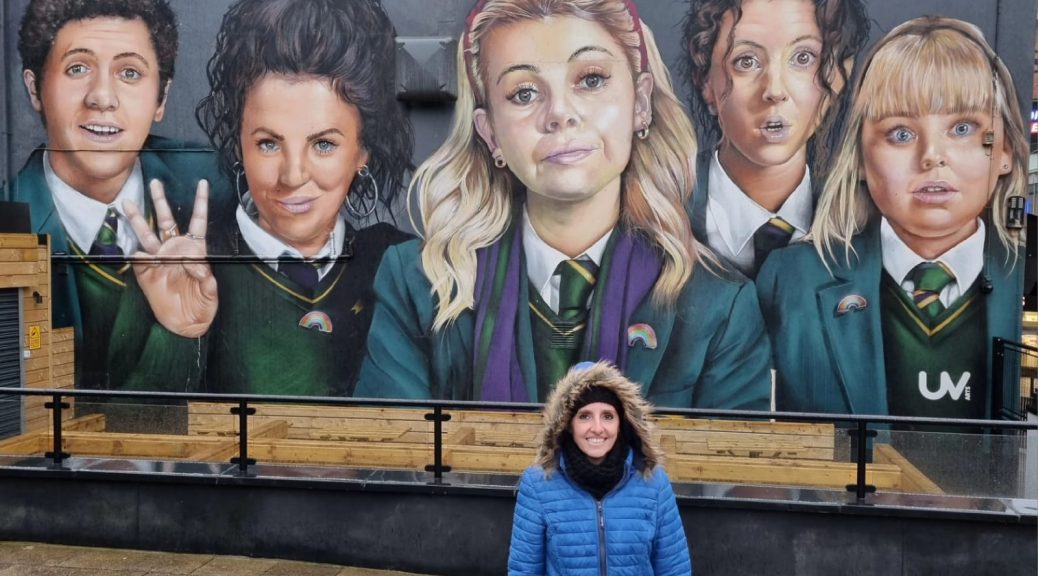
Christian is particularly good at pinning on a mental map, so we then went to fill in the gaps of things he’d seen on the tour that warranted a closer look. Quite easily navigating the city, using the city wall as our guide, we found the mural of the Derry Girls from the popular TV show of the same name that we enjoyed immensely. 

On a more sombre note, we went to pay homage to the site of the Bloody Sunday massacre, with the memorial that now commemorates the landmark. According to Pat, it took years and years to formally evaluate what had happened that day, and it was finally found that the police had overreacted, and the bloodshed was avoidable. Short of the acknowledgement, no further action has been taken; sounds very familiar in light of how similar things are handled back home in South Africa.

By now on the hunt for dinner, we thought the evening’s arrangement would be an easy one since the oldest pub in Derry, which we had spotted on our way to meet the tour, had Chicken and Ham Pie on the menu, which were another box on the To Do list.

Of course, nothing is ever simple. We arrived at the restaurant, had a Guinness and found that we still had another 40 minute wait to get a table because there were two events happening in this venue. Unable to even order until we had secured a table, we would have been eating well after nine, which would not do.

We slipped into Plan B, which was a Dinner for Two set menu offer at our hotel restaurant with two 2 course meals and a bottle of wine for £50. We were unlikely to do much better. 

The hotel did us proud and the French onion soup and crispy bread was served quick and hot; appreciated after an afternoon of walking around in the rain. A roast dinner to follow washed down with an Italian merlot was just a bonus.

THURSDAY 

It seems that the best Irish weather is first thing in the morning.
Filling our boots from the hotel buffet, we checked out, but left the car in the parking lot as we went out to make the most of the sunshine. We took a walk across the Peace Bridge and a loop around the outer city wall, through the ‘West Bank Loyalists’ Protestant enclave with its red-white-and-blue painted enclave… at which time it started to rain, which was our cue to hit the road.

Today’s drive would see us covering 70 miles to see what the South West of Northern Ireland had to offer.

Enniskillen is a Fermanagh House county town 400 years in the making, founded by a charter of King James I in 1612, and grown as a plantation town under the guidance of Captain William Cole.
The name Enniskillen comes from the Irish ‘inis’ meaning island and ‘Cethlenn’ which is believed to be Kathleen (Queen of the Formorians) who, after being wounded in battle, took refuge on the island and died.

The island, chosen as a strategic site, was formally a McGuire stronghold, one of the medieval chieftains of Fermanagh. It is the only island town in Ireland. As well as houses in public buildings, there were wooden bridges, built at the east and west into of the island. These bridges have, of course, long since been replaced with modern concrete versions. The main street of Enniskillen runs the full length of the island, from one bridge to the other. We managed to keep ourselves entertained for the full afternoon on the small section of island.

We made a visit to Enniskillen Castle, which sits on the banks of the river just before the far bridge. Signboards outside the castle speak of how the Meadows make for a great meeting place to enjoy the day going by, assuming there is ever a day when it doesn’t rain.

We enjoyed a slow stroll along the length of the High Street, window shopping and reviewing the menus displayed in the many pubs and restaurants, looking for the ever-elusive pie.

The rain picked up a bit so we were forced to seek refuge in the Horseshoe & Saddlers pub to have a pint in a window table from where we could people-watch.

Being such a small town, we’d already ticked off all the landmarks so when the rain abated we returned to our hotel for some downtime. We’d booked in the motel section of the Enniskillen Hotel, so had 4 star amenities at our disposal for a 3 star price tag!

Having had a lighten than usual day, our massive breakfast lasted longer than usual and when dinnertime rolled around, it was more of a precaution than a requirement.

We decided to wander into town to see what grabbed us, starting with a pint of Guinness at the landmark Victorian pub, Blake’s of the Hollow.

Still not madly hungry, we were drawn to the more modern Firehouse to share a ridiculously good pulled pork and caramelised onion pizza.

Travelogue Madagascar: Nosy Be

NOSY BE

09-16 June 2026
Madagascar had long-since been on our list, remaining elusive thanks to the absence of cruise options that I’d imagined would make for quite an adventure circumnavigating the world’s 7th largest island. Chris broke the stalemate by booking us a week in Nosy Be for a little treat midway between our 50th birthdays – and a great reason to escape the middle of winter in Joburg. With only a 3.5 hour flight standing between us and paradise, we left the cold front behind us.
Landing in a charming rural airport, we were greeted by the guide from our prearranged transfer. Jessica was a delight. Although she spoke very good English, she humoured us with slow French as we navigated each step of the arrivals process, so we could put to practice all we had been learning on the Duolingo app. We didn’t have much time though since jump-the-queue was all part of the service and we slipped through the admin like a hot knife through butter. We were ushered into a luxury van, welcome complete with cool face-towels and ice-cold water to combat the mere minutes of humidity we had endured between exiting the airport and stepping into the waiting vehicle. Jessica explained that we were about 30 minutes from the hotel, depending on traffic.
‘Traffic’ was not what we were used to. Leaving the airport, we took (what we learned later was) the ring road that ran along the coast around the island. Although only a single lane in either direction, the tarmac was pristine and cars, vans, tuk-tuks, motorbikes and Zebu (ox) carts seemed at liberty to use whichever part of the road was free, irrespective of the direction they were going. A functional system by the looks of things, as we swove and veered through a few little towns with their tuckshop market stalls and humble homes lining the roads.
With the short flight and only losing an hour in time difference, we made it to the Royal Beach hotel mid-afternoon and were welcomed and inducted in good time to change into our swimmers and grab a lounger on the private beach in front of our resort. What a blessing to lie back in the last of the Tuesday sunshine and watch the sun slowly set over the sparkling sea!
Chris had booked us the full-board package as a no-mess-no-fuss option, so we further counted our blessings over sundowners in the open-air cocktail lounge before heading up to the buffet restaurant for a multi-course dinner of all sorts of delicious things.

WEDNESDAY 

We had agreed that our first day would be dedicated to doing nothing, except book our excursions. There were some obvious choices like visiting neighbouring islands and seeing the lemurs which were now a household name, thanks to the memorable King Julian in the animated blockbuster classic movie,
Madagascar. Other plans proved to be a little more of a challenge, like organising a scuba dive outing and a hike up the volcano that Chris had read about in many travel reviews about must-do things in Madagascar but weren’t on the hotel’s excursion list. The travel desk did give us a QR code to contact a local dive company for details over WhatsApp.
We weren’t going to overthink it. With Thursday and Saturday excursions accounted for, we would figure the rest out later, in between back-to-back buffet meals and with hours and hours of lounger time to mull it over (or not). We idled, we swam, we observed a beach volleyball game, we smiled as the resort’s entertainment team engaged the local kids in a choreographed dance to a catchy song with a chorus that said “Royal Beach. Ca va?”… then we swam some more, we lunched, we sat, took a dip in the sea. It was great.
In the afternoon we took a stroll along the beach and happened upon a dive shop, Blue Wave Dives. We got all the info for the Friday dive we were after, with no context of the value of the ‘2 dives for 2 persons for €230’ on offer. No need to commit though because e-commerce was thriving on this little island and everywhere seemed to have a QR code and everything seemed to be negotiable on WhatsApp. So we hustled along, saying we would be in touch over text if needed.
Returning to our resort, we did a tour of the facilities – and there were plenty. Too hot to play tennis or volleyball, sauna or jacuzzi, we settled on 30 minutes in the airconditioned gym to move lunch and make space for another buffet dinner. It was quite refreshing to shift the cobwebs of a lazy day, with enough time to still have a leisurely sit-swim-sit session afterwards. We realised that “Royal Beach. Ca va?” was played a few times a day, to mark the start of various activities. The song would be played over the sound system that served the beachfront and all the animation team members would run to in front of the loungers and play out the choreographed dance, dotted out in front of the guests so everyone was entertained. Including the local kids, a few of whom would always join in the fun.
Prompted by the rendition that heralded the start of sundowner o’clock, we returned to our room for a quick shower before heading to the reception to meet the travel desk’s referred dive team. Listening patiently to their pitch, it all sounded heavenly and we were ready to sign… until we heard the price. They were a more than 100 Euros more expensive than the other company we had visited, for the same 2 dives at the same sites over the same duration for the excursion! AND they only took cash, which was a problem for us since we had waved off the opportunity to exchange forex at the airport, assuming we would be able to do it at the hotel. Which we could not. They didn’t accept credit cards to buy forex and would not exchange Rands. Fortunately the travel desk accepted credit cards for the excursion, but we would have to get a tuk-tuk into the nearest town (ominously named Hellville) to get the 1.5 million Madagascan Ariary (the equivalent of 320 Euros) for the dives. The additional cost and admin was a deal-breaker. We bid them farewell and scurried back to the first dive shop to secure our dives (able to pay digitally) before resuming our position at the same table we’d occupied at the cocktail bar the previous night. With the last minute hustle, we were famished by the time the buffet opened! … and grateful to have space for all the seafood and pasta dishes, as well as tender and juicy Zebu fillet with peppercorn sauce.

THURSDAY

Having failed magnificently at our upfront agreement about a one-day-on-one-day-off excursions policy – thanks to combining our predetermined must-do with FOMO at the travel desk – we found ourselves committed to a back-to-back itinerary. The first day was likely to be the most ambitious; the 3 Island Tour.
We were collected at 07h30 in a van, to be transported to the top of the island to join a group from our sister-hotel, the Royal Andilana. If our resort was at 7 o’clock on the south-west coast, they were 11 o’clock on the north-west, so the 30 minute transfer incidentally gave us a tour of Nosy Be’s west side. We got the lowdown from our guide on life as a Malagasy as we traced the ring road and passed through the little towns whose community and commerce organically spilled onto the tarmac.
Counterintuitively, once we met the rest of the group, we got on a boat to travel all the way back past the bottom of Nosy Be – right past our hotel – to get to Nosy Komba (5 o’clock off the south-east coast), which means “Island of Lemurs”. Stepping off the boat and onto the beach, we were welcomed by our tour guide and led through the village to the entrance of the nature reserve. We were briefed that although the lemurs were wild and free, they had become tame from the streams of tourists that visited the island. They could be expected to engage with us and the advice was to keep calm, stroke them if they let you and not to touch their tails.
The secret ingredient was banana. There were scores of lemurs sitting in the trees on either side of the stone path circuit that would take us through the park, watching us with their comical saucer-eyes. We were given small portions of banana to rub on our fingers. Raising a palm slowly in the direction of a lemur was like using The Force; it instantly garnered interest and then with no coaxing at all a little friend would leap from the tree onto your shoulder or head. They were very compliant to the strokes and photos… as long as you had a banana on offer. Their startlingly determined human-like little hands would pull your fingers toward them and hold them steady while they licked up their rewards. Once they were done, you could expect to be abandoned as the nimble creature resumed its position on its branch, smug at how well it had us trained. We had great fun posing with lemurs of all shapes and sizes as we made our way up the hill.
Next up was the snake experience where slithering boas were lifted from a large sunken stone enclosure such that we could drape one around our neck or allow it to twist and wind around our hands. Mildly assured that it was a safe activity “because boas are nocturnal”, it seemed like as good a time as any to tick this one off the list. The guide also advised us that they rotate the  showpiece snakes on a monthly basis, depositing the outgoing demonstration reptile onto the far side of the island to go back to enjoying its life in the wild, to be replaced by a new captor for the following month. I’m not sure if that information was designed to calm any animal rights concerns we might have had, or to subtly insinuate that any wild snakes would prefer to be living their best lives well away from where we were!
The tour was concluded with a visit to the tortoise enclosure where we were introduced to the 3 giant inhabitants – George Bush (the youngster at 45 years old), Pablo Escobar (70 from the Galápagos Islands) and Caroline of Monaco (90 from Seychelles). They were huge, in no hurry and, so we were told, enjoyed a tickle on their wrinkled necks, so it seemed rude not to oblige. It was very sweet the way the tortoises leaned into the tickling. I suppose with their shape, it’s possible it was just solving an itch they couldn’t reach to scratch, but happy to help nonetheless.
Returning to the boat, it was a short hop to Nosy Tanikely (6 o’clock), which was declared an underwater national park in 2010. We had been given fins and masks at the beginning of the trip and now was the time to put them to use. Shedding our shirts, we jumped off the back of the boat and into the crystal waters, so clear that we could see all the way to the seabed below. We flicked our flippers and spied on the sea life for a half hour or so before being transported to the shore to relax in the shade of the palm trees with complimentary refreshments.
Last stop was all the way at the top again, to the private beach at Nosy Sakatia (10 o’clock) for a fish braai for lunch. We were amazed at how different each island had been, this one known for its emerald green water and giant turtles. There was a large thatched area right on the beach with laid bench-tables awaiting our group. Our hosts had pre-prepared the food anticipating our 2pm arrival and accompanying appetite from the busy morning so we got stuck in right away.
As luck would have it, we were seated with the only other South Africans (or English speakers for that matter) on the tour, and we were soon swapping stories about our respective resorts, travel experiences around the world, life back home and aspirations for the remainder of our trip. With the local brew, Two Horses, flowing and the hosts daring us to try the variety of local rums that they had for us, it was a very festive couple of hours in paradise before the hop back to our mainland to retrace our footsteps back home for sundowners and an unneeded but still much-anticipated indulgent buffet!

FRIDAY

Another early start to be in the breakfast buffet queue bang-on 7am such that we could pop along the beachfront to meet our Blue Wave dive team for the morning’s excursion. The chaps from the shop were there, as promised, ready and awaiting our arrival. We were assigned to Marco, with the other dive master attending to the 3 Italian ladies that completed our group.
Onboard the open speedboat, it was a 20 minute hop to Tanikely Island to dive in the reserve. Marco shared that our first dive would be on the east side of the island, then an hour to rest with drinks and biscuits on the beach followed by a complimentary dive on the other side of the west island so we could compare the reefs. He also gave us a refresher briefing on all our equipment and the hand signals we would need to use to communicate with him underwater – a welcomed reminder since we’d last dived in Malta in 2018!
Since the sea colour at the beach in front of our hotel was the same blue-green as the India Ocean we see at home, I had assumed that the underwater experience would be a bit thick and murky. Not so! On taking our giant-step off the boat we plunged into crystal clear water with visibility easily 40 metres or more. Being relatively shallow (around 16 metres for most of the dive), you could see the seabed from the surface and already, hovering just below where underwater starts, we were treated to a spectacular of bright and shiny fish going about their business.
Being a reserve, the reef was largely unspoilt and had lots going on, with most of coral was earthy tones rather than the stereotypical rainbow of bright colours you might expect. However, the neutral background just made the fish population even more prominent. I have no idea what I saw but it was lots of different fish of all shapes, sizes and colours everywhere all the time. Like swimming in a fish tank! We even saw a shark (that luckily wanted nothing to do with us), stalked a couple of turtles (who moved so gracefully it was like their front legs were wings in the water) and I tried to join a huge shoal of yellow fish (but was shunned like an ugly duckling).
The diving was an absolute must-do and by far the best morning we had had on the island. Controversially, I enjoyed it more than our excursion at Great Barrier Reef even. Although the coral was less interesting, the warm, calm water + abundance of sea life + the small group (even though there were other boats doing other dives, it felt like the 5 of us were the only people in the ocean) + the clear-as-glass visibility + the simplicity of the logistics put the overall experience head and shoulders above the rest.
We had lots to review and reminisce over our lunch on return and ensuing afternoon on the loungers watching Beach TV as the land-creatures moved about in front of us, and joining in for the chorus of “Royal Beach. Ca va?” like locals. We might never have budged had it not been for a lady from the Animation team recruiting us for a game of pétanque in the sandy courtyard. Chris and I were split into separate teams and although unable to directly communicate with any of our team mates or competitors – a mix of Italian and Scandinavian – we all muddled through a highly enjoyable couple of hours lightly moderated by our multilingual hosts.
By now we had questioned guides about the composition of tourists and we surprised to learn that South African guests were few and far between – madness with a 3.5 hour direct flight on Airlink every Tuesday. We had anticipated flexing our French throughout the Nosy Be adventure since Madagascar is a former French colony and the schools still educate in French first-language. Yet, more than 80% of the tourists are Italians. So the hospitality crew mostly spoke Italian, responded to French and struggled a bit with English (or our accents perhaps). The upside of course was that the buffet became a cultural melting pot, rich with fresh seafood and traditional Malagasy recipes, paired with the freshest Frenchest breads and partnered with at least 1 pizza and 3 different pasta dishes on offer on every buffet. The chefs were Italian so we had some of the best pasta of our lifetime!

SATURDAY

With the days becoming a bit of a blur, we hit the breakfast buffet with vengeance and fury to be at the reception at 07h30 for whatever the day had in store for us. Our guide reminded us that we’d booked the full-day tour to Iranja Island. And so off we set, driving up to the sister-hotel again to pick up the rest of the group and depart by boat from there.
Having no recollection of mention of such, the very long (90 minute) boat ride took us a bit by surprise. At least the journey was kindly punctuated by a pod of dolphins, for whom we stopped and watched them gently lazing in and out of the water all around our boat. This was an especially big win for me since I have tried all sorts of whale-watching and dolphin-related excursions all around the world and regularly fail to see anything at all!
As we pulled into the natural port at Iranja, we were welcomed by several turtles. With the graceful shelled friends easily visible through the translucent water, the skipper slowed and approached the shore very cautiously so that we could enjoy watching our new companions as they glided along beside us and popped up intermittently for a photo opp. We had arrived at our destination, which was a gorgeous paradise of luminous turquoise ocean that became crystal clear as it met the soft dazzling white sand.
First order of business was to walk the sandbar for which Iranja is famous. This was a natural sandbank that connects the main island to its small neighbouring isle when the tide is low. A generous beach at the point of departure, the sandbank sticks out like a golden tongue that soon tapers to no more than a couple of metres wide, with a lapping shoreline on both sides. At several points an ambitious mini-swell would rise up the beach on the one side and pass over the little sandbank to join the sea on the other side, lapping water around our ankles on its way. The entire length was just over a kilometre and deposited us on the deserted beach of the small island that would be entirely independent most of each day. We took a few photos and started the return journey quick-smart lest we be stranded!
We got back in time to join the guide who was taking a handful of our group on a short walk to another beach on the other side of the island. This took us through the town that was hosting us – a few neat rows of bamboo style huts – to emerge on the other side at a beach even more beautiful than the last. The sand was whiter and the sea was brighter. A few A-frame glamping huts but nobody in sight… until we got there.
It was such a relief that everywhere we’d gone, our guides had assured us that our belongings could be left safely while we explored or swam. Madagascar is an impoverished nation with incredibly high unemployment and distressingly low education. The government doesn’t pay for schooling, nor is it mandatory; many parents simply can’t afford it so kids of all ages spend their days hanging out and playing soccer at the beach, as we had seen at our resort. Nonetheless, the appreciation for the prosperity brought by the tourist industry was enough to keep petty crime in check. And we were able to dump our belongings – including cell phones and valuables – exposed and easily accessible on our towels on the formerly-deserted beach and paddle around in the warm and welcoming waters without a care in the world.
The next prompt was an hour or so later, where the guide would be taking those interested up a trail to the lighthouse at the top of the island. Game for everything, we towelled off and followed the group. The middle of the island was a stark contrast to what we had seen so far. We were shaded by a canopy of trees as we climbed the steps, lined on either side with local tapestries and paintings up for sale. The local ladies did good takings from our Italian companions, who were keen on the tablecloths with embroidered turtles, the wooden hand-carved Madagascan Airlines airplanes for the bambinos and more than a fridge magnet or two changing hands. We of course continued to save a fortune since we hadn’t drawn currency at the airport.
Our return back to beach camp revealed that it was time for lunch. Everyone was seated at long bench tables under the thatched shelter while drinks were distributed and then a feast was served from the buffet table. An impressive spread to have prepared in such humble surroundings! Calamari salad, pickled veg, chicken casserole, grilled fish and a tomato pasta dish for those looking for something less authentic.
Fat and happy, we were given an hour of free time to relax and enjoy before embarking on the return journey. Having caught more than our fair share of sun for the day, we stayed put in the shelter to continue being entertained by the local band that had serenaded us through lunch. Very nice having nowhere to be and nothing to do for a change!
Our turtle friends put in another appearance to wish us farewell as we left their bay to speed across the ocean back to Nosy Be.

SUNDAY

Our tour director had noticed our anguish at the repeated early starts the previous few days and proactively took pity on us, scheduling our hiking day to begin at 8. The extra half hour slumber was well appreciated – and there was even time for our traditional hot chocolate with marshmallows before heading down to breakfast.
Dab hands at the buffet by now, we worked through the row of bowls, platters and chafing dishes like a very focused duo of locusts. We were, in fact, early to arrive at the entrance to meet our guide. Who, to our surprise, led us down the street on foot where, to our great delight, there was a tuk-tuk waiting for us. We had it on our To Do list to take a ride in one at some point during the trip (just so we could say we did), but were running out of time and opportunity so this was a wonderful windfall.
We three (Chris, me and the guide) squeezed into the single back seat and were soon buzzing along the West coast of Nosy Be, veering, swerving and tooting like all the others competing for our stretch of tar. It might have been more terrifying (or thrilling) if we were going any faster, but thankfully there were no downhills on this sea level road to see us clock the 40KPH mark!
We were deposited at a town square of sorts. (According to the Strava map at the end of the day, called Dzamandzar). Skirted by more of the tuckshop stall market shops, there was little to indicate that the dusty patch was of consequence had the guide not told us that this area would be a hive of activity as Sunday morning trading unfolded and would be the place-to-be in the afternoon as it hosted Kickboxing competitions every Sunday afternoon at 3pm. He led us across the area and onto a very dodgy looking pathway that had our Saffa Spidey-senses instinctively make us clutch our valuables closer to us… forgetting for a moment that this was Nosy Be.
A highly unlikely starting point to the hike, but apparently it was. We traipsed through the ‘suburbs’ with scores of small children greeting us enthusiastically in a collection of languages, their parents eying us cautiously and the many many dogs ignoring us completely as they carried on living their best lives, snoozing to escape the already-rising temperatures. With little to no expectation for the day, we took on the chin the dilapidated defunct sugarcane factory that was presented as our first site of interest. Par for the course since we were walking along a path that was once a train track, with the abandoned train cars slowly rusting like a decomposing carcass.
As we moved along the trail, out of the town and into the beautiful countryside, our guide shared stories with us about the area and the people. He told us about the layout of the island, explained the differences in the dialects and the distinctions between the people from the South and those from the North. He shared similar sentiments to the previous guides about how the Malagasy government continued to fail its people, ignoring the poverty and providing no social welfare to uplift its constituents. Along the way, he also pointed out countless trees and bushes, telling us what could and couldn’t be eaten, when things bloomed and fruited, what could be processed or sold and what served medicinal purposes.
As we left the town behind us, the trail was shared with many local people going about their daily business. There were ladies moving along with loads of who knows what all on their heads.
Men shepherding zebu, small barefoot children and good dogs up the uneven path from who know where to who knows where. Inhabitants of the remote huts lifting pausing their graft to greet us as we passed. We even popped in for an impromptu visit where we were invited to see a cat nursing her two tiny little kittens, one of whom had flaked to nap on a nearby bunch of bananas. You certainly don’t see that everyday.
Once we were cleared of the last signs of urban(ish) life, the climb so far had been mostly dirt track through fields of grasses and rice paddies – dry and waiting for the rainy season to produce the staple food on which the local people depended. Then, about an hour in, the trail narrowed as we entered a jungle of sort and needed to negotiate a twisty route of sharp ups and steep downs. This proved to be the way down to the river with the waterfalls. A gentle trickle in this hot, dry season, we were told this same river would rage at the beginning of the year and spit gushes of water off the edge of the rocks into the pools below. Either which way, it was nice to cool off with a splash of cool water!
Crossing the ravine meant using a cable bridge that bounced and swayed as we stepped. Not the kind of excitement you want from a bridge-crossing! But we had a nice reward for reaching the other side as our guide had picked ripe yellow bananas from a nearby tree so we were able to take a moment to enjoy fruit so fresh it put our suburban farm-to-table smugness to shame. With new pep in our step, we navigated the Antsamamavaka circuit down into the volcanic crater (last eruption was 12000 years ago so we felt pretty safe), pausing where the foliage curtains opened to allow spectacular views of 2 of the island’s 12 lakes.
On arrival at the lake, we were astounded to see two ladies tirelessly working a paddy field in the midday heat. Our guide explained that the water table fed the rice from below even during the hottest seasons and the local people had to work very hard to maintain and harvest the fields to keep food on the table. They also had no running water so would need to use buckets to source fresh supply on the return journey home for the day. To make matters worse, the lakes were known to be home to crocodiles which was prohibitive to a relaxing swim to wash away the toil. That really is a tough day’s work compared to my office job, which I will try to remember when I’m about to complain!
We were offered a trek to see another lake, but were very hot and sweaty by this stage so opted to cut to the finale instead. This saw us climb back up the other side of the crater to emerge at Mont Passot, 329m above sea level that allowed 360 degrees panoramic views of the islands and all of its lakes. But, as luck would have it, there was a cloudburst – microclimate incident, we presumed – as we arrived at the entrance to the reserve so instead of further clammy climbing, we got an ice cold Fanta and thanked our lucky stars for the tuk-tuk that was ready and waiting to take us back down the mountain.
The ride back was filled with giddy chatter about all the things we had seen. But just when you think you’ve seen it all… you stop at a Nosy Be petrol station. A hut on the side of the road where you buy petrol in 2 litre soft drink bottles! Record-breaking pitstop turnaround time too. Minutes later we were dragging our tired feet into the resort and straight to the main swimming pool. It was bliss to jump straight in and lounge around in the cool water before tucking into a hearty Zebu burger for lunch.
Needless to say, the rest of the afternoon was spent doing very very very little. There were amazing 4-poster outdoor beds facing the sea, so we grabbed a shady one and observed. Tapping our feet to the now-familiar Royal Beach song, the laughter of the kids bobbing in the waves, the rhythmic thud of the volleyball game, the clinking of bottomless beers and pétanque balls. Aaaaah. The sweet sounds of resort-life.

MONDAY

For a day that we called our ‘do nothing’ day, we were quite busy. We could have been a montage for all the things you could do at the resort. A no-alarm start to the day, with hot chocolate with marshmallows. Then a multi-course breakfast fit for a king, at our usual table overlooking the ocean. Then back to the luxurious room to watch the last couple of episodes of the series we’d brought along for the holiday and been too busy to watch.
Mid-morning burst to visit the airconditioned wellness centre for a run on the treadmill to work up an appetite for a too-soon lunch. But first to catch a breath for an hour testing the resort’s other big and beautiful pool at the back of the gardens which we had all to ourselves while everyone else was excursioning and beaching. And then of course a fish n chips lunch to reward a morning well done and to prepare for an afternoon of sloth, on the beach until the tide came in and the lapping waves licked the legs of the loungers alerting us that it was time to retire to the 4-poster to watch the golden sunset one last time to our favourite soundtrack. Royal Beach, ca va bien!

Travelogue Portugal 3: Algarve 2

ALGARVE Part 2

04 – 07 November 2025

TUESDAY

With only 60kms ahead of us, two planned stops and a 3pm check-in, there was no particular rush in the morning. Plenty of time to take a trot around the castle and then enjoy the buffet breakfast that was included in our hotel booking in Silves.
 
The day’s route would deliver us in Algarve’s capital, Faro, via Albufeira and Quarteira. We could tell that we were approaching an international airport. From first impression as we pulled into our parking bay in the centre of Albufeira, the spray of shops spilled onto the pavements with their displayed array of tourist memorabilia and beach paraphernalia. Nonetheless, we disembarked and followed our nose to the old town.
 
Using signage at the landmarks we tracked from our offline Google Maps, we pieced together that Albufeira dates back to ancient times. During the Roman occupation it was called Baltum and for 500 years was a major producer of olive oil and wine. In the 8th century it was a Muslim conquest and was called Albuhera. In the 13th century, King Afonso conquered the area for the Christians and made it part of Portugal. Then the earthquake in 1755 completely submerged the town, but it was rebuilt into an important player in the fishing industry and a thriving tourist destination. Christian joked that the town was still being invaded to this day… by British tourists!
 
Although a very pleasant walk-around the old town with easy access to historical points of interest and beautiful views of the ocean, the tourist trade brings hecklers and it was tiresome having to decline the endless invitations to enter restaurants, take a seat, get a discount or try a special drink/snack/offer.
 
Interestingly, Quarteira was quite the opposite experience. Clearly a holiday town that considered its season over for the year, we enjoyed a leisurely stroll up and down the wide and relatively deserted promenade. Poster boards informed us that this little town had sprung up since the 60s, with illustrations showing how the single row of scattered houses along the beachfront had soon become rows of high rise apartment blocks competing for their sliver of sea view.
 
Although neat and tidy, it wasn’t the most creative era for architecture and made no attempt at embodying the charm or heritage we’d seen in the other coastal towns. Since the majority of the windows were shuttered, we wondered if this modern set up made for more economical holiday / second homes for the Portuguese. Carlos at Arvad had told us that the Algarve was traditionally flooded with local tourists over August when the country shut down for their holidays. Perhaps this sort of scale made it more affordable for this influx. Critique of facades aside, we were still having a very lovely time enjoying an ice-cream at the sea side!
 
Having achieved what little we had needed to achieve, we set sights on Faro. Similar to what we’d done with other old towns (like Avignon in France and Leon in Spain), we located ourselves just outside the city walls – at the very lovely Sunlight House – so it was easy to park but still benefit from easy access to the sights and old-world vibe. Our strategy paid off. 10 minutes early for our 3pm check-in, I spotted a free walking tour brochure while Chris was handling the admin. We managed dropping our bags and high-tailing the 450m to the meeting spot to arrive breathless 2 minutes into the tour and having missed nothing but introductions by the cosmopolitan composition of the group.
 
What a great tour! Andre had studied Economics but had self-admittedly adapted to a more ecological viewpoint from his life experience. He unwrapped the millennia of twists and turns the region had taken as it had shifted through the reign of the (Muslim) Moors from 700 AD, to the reclamation by Afonso III (and the Christians) in the 1300s, diplomatically addressing the harmony and toils of the religious mix. Similar to the stories we had heard in Lisbon, the Inquisition brought all sorts of religion-based separation and bloodshed where peaceful co-existence had previously been the norm. Andre was emotive but diplomatic in unfolding the story and drawing parallels to the current sorry state of the world.
 
We wound our way through the old town, admiring relics from each era, from our meeting place at the city gate to rounding the Roman Forum that housed the bishop’s palace and seminary, past the City Hall. Steeped in history, every corner revealed a new piece of the story that brought together Faro’s trinity; Fado + Fatima + Football. Highlight for me was the revelation at a blue and white mural (one of the many across the Algarve) that these used to be the colours of the flag of Portugal, now replaced with the modern-day red to symbolise the bloodshed and green of the Republican Party that brought about the change but which no longer exists.
 
Having beat such a hasty retreat to meet our guide, we hadn’t thought to grab jerseys. Quite chilly on this late autumn evening, we retraced our 450m from the completed loop of the tour back to our residence. Peckish from our excursion and nearing a respectable dinner time, we took advantage of the access to internet to pinpoint a traditional Portuguese restaurant on The Fork and secure a 18h30 sitting.
 
This gave us enough time to amble in that general direction and stop for a sundowner en route. We picked a lively locals cafe, Pastelaria Coehlo, where we were lucky to  get a table. Having so enjoyed the atmosphere and impressed by a quick gander at the menu, we were quite sorry to have to leave. Fortunately our baked cod in cream sauce and paella-style duck rice at Petiscaria Decanter were great! We did return to Coelho for a nightcap after dinner though; finding a table directly under the telly that had the rest of the clientele transfixed on a local football match.
 

WEDNESDAY

A drizzly morning thwarted our good intentions to run along the Faro promenade. But also meant that there was no particular rush to get up or get moving to do anything else. Our booking at Sunlight House included breakfast, which was served on the rooftop terrace, from where we could see what we would have seen on foot anyway. Almost like clockwork, the rain stopped once we were fed and packed, which allowed the opportunity for a last wander along the water to say our farewells to Faro.
 
The later check outs at the Algarve hotels help to balance the short driving distances and mix of excursions that suit each stop. For instance, the wine tasting we planned to do at Al-lagar on the outskirts of Tavira (where we’d be staying overnight) would have been awkward if we’d checked out any earlier than 11 and not done the extra walk in Faro seeing as the drive was barely 30 minutes. We were encouraged that several tastings were underway when we arrived! We had picked a goodie and bought a couple of bottles of our favourite rosé and red to take with us.
 
Although treated to a mixed bag of weather, travelling off season (as had been necessitated since we were timing with the concert we’d attended in Lisbon) had its merits. Our hotel – the AP Maria Nova Lounge Hotel in Tavira – was notably above our usual standard and budget, having been secured online at a fraction of rack rate. We were very chuffed with our spacious suite and all the amenities the hotel had to offer. Not that we ever seem to have time to take advantage of them because once again we dumped our bags and were off like a shot to explore.
 
Instinctively following a cobblestone alley or two to navigate towards the water – which we later learnt was the Gilão River – we had no trouble finding the hub of old town Tavira to secure a tourist map that would provide a route around the castle and handful of churches. We had the place pipped in an hour or so, congratulating our efficient sightseeing with a Guinness at the Irish pub on the riverfront to which we were drawn by the lilting voice of the two-piece band delivering reasonable acoustic cover versions of popular classics.
 
As the sun went down, it got chilly on the water so we went back to our lovely hotel to enjoy some of the facilities before dressing warmer to head back to town for dinner. Now inland (although still only 3km from the coast) we were not pressured to continue on the traditional seafood journey of discovery that we had been on for almost a week. It was now time for our traditional holiday curry dinner. Much like Irish pubs, there is always a curry house wherever you go. So we ended up at Mehfil’s. We were delighted to see that they had pork curry options on the menu, which we’d not seen anywhere on our travels so we got a balance of the something old and something new after all!

THURSDAY

Our last day required the long drive back up toward Lisbon, from where we would be flying home on Friday. While we had meandered down the coast to get to the Algarve, the return journey was a more practical and pragmatic coverage of the some 200km distance. Not wanting the pressure of a long drive straight into a long back-to-back air journey home (we were flying via London), we had strategically reserved a room in the town of Setubal for joint benefit of a last night of coastal holiday but only 30km from Lisbon airport.
 
Setting off on schedule and making too-good time, I checked out route for a potential stop to slow us down a bit. ‘Mother House of Wine Route’  was too good a name to pass up! Situated in Palmela which was off the A2 highway that had brought us from the Algarve, directly en route and about 10 minutes shy of our final destination, we could not have asked for better.
 
We parked the car and did the obligatory snoop around the town square before bee-lining to our excursion. What we found was a very respectable building on the square with neat deck in front where several tables already homed enthusiasts with multi-coloured wine tasting flights. Entering the building, we stopped to examine the illustrated map papered on one wall, which showed us that the entire peninsula of Setubal was a wine region. No wonder it had come up recommended on our itinerary! This building was a centralised place to experience wines from all over the region. There were hundreds of bottles neatly displayed in rows of glass cabinets, with a bar counter at the back where you could order tastings, wine by the glass or purchase whole bottles.
 
The lady at the counter was very friendly and helpful and filled us in on the basics of the Setubal region, mentioning grapes we were familiar with, that had been introduced to us in the preceding week and new ones we’d never heard of. She was kind enough to give us a sip of this and that along her story to prove her points. We settled on a favourite red and white to get a glass of each and took our place on the deck, feeling worthy from our flash education. Both were really good. So we tried two more. And bought a bottle of white to take home.
 
Using nicely closed the gap to get us to check-in o’clock, we just had to roll down the hill into the town of Setubal. It was busy and as close to traffic as we’d come on our tour. Chris deftly managed the double-lane circles and all the lane changes that came along with them to get us to B&B Hotel. Once again, our intention was to secure the car and explore on foot, starting with the Forte de Filipe.
 
We think the Google Maps lady was getting even with us for all the long and unpronounceable Portuguese names on our road trip (even we had laughed at her blatant and clumsy Anglicisations) because she chose the most convoluted and challenging route imaginable to push us up the steep hill to the fort at the top. We were huffing and puffing by the time we arrived… but were treated with free entry (which is rare). Ordered in 1582 by Filipe II on his visit to Setubal, this fortress was designed to protect the Portuguese coast from the regular pirate attacks from Northern Europe and Africa. Its positioning on this high steep hill allowed the most spectacular vistaramas up and down the coast as well as the ocean into the deep blue yonder, which must have been a big advantage when the fort had its job to do.
 
Unfortunately the cafe on the visitors deck was already closed or we would have stayed to enjoy a sundowner, but instead we hoofed back down the hill. Somehow the return journey was direct and short, and we practically freewheeled onto the promenade where Carlos at Arvad had said we’d be spoilt for choice for dinner.
 
Sure we would be, but a bit early for that (most restaurants opening with 7pm bookings), we accepted an invitation into Bar Absurdo for a sundowner to kill some time. Very nice upstairs venue gave us a vantage point to view the esplanade below, and good internet gave us opportunity to narrow down our options. We decided to keep the last night traditional with Original’s Casa de Peixe offering a whopping 50% discount on their 7pm sitting. We had the most spectacularly seafood feast with deep fried cuttlefish to start, following by prawns in a curry cream sauce and the hugest grilled tuna steak imaginable. Thankfully we had the walk home to settle our scrumptious supper and close off what had been a truly superb road trip.
 

Travelogue Portugal 2: Algarve 1

ALGARVE Part 1

01 – 03 November 2025

Sorry to leave Lisbon, but excited for the road ahead, we packed up and left the Ibis Lisboa Saldanha that had been our happy homebase for the last few days and grabbed an Uber to Sicily By Car to collect our rental. A spanky new Fiat 600 would be our chariot for the next week.

Having found a great Lisbon to Lagos road trip itinerary online, we tapped it into the GPS and hit the open road. Luck was on our side and although the drive was in pelting rain, it had let up by the time we reached our first stop, Sines, the birthplace of intrepid explorer Vasco da Gama.

Unsure as to whether the town was so eerily quiet because it was Saturday or because it was All Saints Day, we parked the car and crept along the cobbled old town roads to observe the peace. Popping out at the beach, we stopped for a photo with the Vasco da Gama statue before venturing onto the sand on the beach named after him. Although dry, it was still hardly beach weather, so we headed back to the car, with a stop-in at the free-entry Castle and museum en route.

We appeared to be travelling through an uncanny series of micro-climates. Back in the car, we had rain continuously as we navigated to the next stop 10 minutes down the coast. Then as we parked, suited up and retrieved the brolly, the rain miraculously stopped, allowing agreeable conditions for our quick stop at Port Covo. On first impression of the neat seaside holiday resort town, we admired the uniformity of the rows of white block homes and the sanctity of the pedestrian street that led down to the beach. There were pathways and viewing points dotted along the cliffs that overlooked small slices of toffee-coloured sand in private coves below. We could imagine this to be a wonderful weekend getaway to spend some time doing very little. 

With the rain seeming to have given up completely, we had dry passage to Vila Nova de Milfontes. Translated as ‘town of 1000 fountains’, we were surprised to see not a one. We parked and walked to the right all the way up to the lighthouse and didn’t see a fountain. Then back along the beach to the left and into the old town. A castle, a memorial to 3 Portuguese chaps who it appears were famous for flying to Macau in a turbo-prop plane in 1924, a cluster of narrow cobblestone alleys. But still no fountain. We had a fabulous seafood lunch at Paparoca Sanduicheira overlooking the estuary. No fountains down there either. Curiouser and curiouser.

The last leg of the day saw us delivered safely in Lagos, where would be staying at the Tivoli Hotel and Resort. We were very pleasantly surprised at the luxury that welcomed us – and mentally high fiving AI for finding us such great value within our stipulated budget. A sprawling resort one road in from the promenade, the Tivoli had everything you could think of. Indoor and outdoor pools, pool table, table tennis, jacuzzi, gym, library, business centre, live music in a buzzing Happy Hour bar and inclusive of a buffet breakfast – that we would find out the next morning was fit for a Dom! To top it all off, we were given a complementary upgrade from a standard room to a suite with a pool view (later exploring would discover that this was probably from a leak in our original wing, but whatever).

Loathe to leave our resort, but curious to discover our new surroundings, we set off into the crisp (dry!) evening. Lagos was very pretty, with lights from the bobbing boats in the harbour twinkling on the rippling waters. The row of restaurants across from the promenade already delivering snatches of conversations and waves of laughter as we passed by. Always such a novelty to walk so freely out at night. 

Having had no specific intentions, we’d walked up to the right from our hotel. About a kilometre down the road, we found a (locked) castle on the quay and a section of old city wall with a well lit archway entrance that earned it a bookmark for the following day’s explore. There was also much activity and merriment down this end of town, with families spilling out of the church, obviously having enjoyed an uplifting All Saints’ Day sermon.

SUNDAY

We awoke to bright sunshine, which was something for which to be grateful after enduring the last few days of grey skies and intermittent drizzle. With our route mapped the night before, we donned our togs and put tekkie to tar for our jogging tour. Back down the beautiful wide and smooth promenade – once again admiring the Portuguese commitment to excellent stonemasonry on every road in every town as a standard. We ran around the ancient city wall and back through the Old Town, exiting at the arch we’d seen the previous night. 

Then back along the full length of the promenade to see what that held in store. A far more modern and developing part of Lagos, with spacious apartments with glass balconies reflecting the view of the spotless marina. Crossing the bridge had us back at our side, slipping up our now-familiar inlet road to return to our resort.

With a midday check-out, there was time for a multi-course feast of a breakfast and then to laze and linger before having to take to the road again.

The first stop was a much-needed leg-stretch to settle our gluttonous first meal of the day. A mere twenty minutes drive up the coast to the sleepy beach town of Selema and we were happily shuffling along the beach sand, with the moderate sun shining down on us. As nice as it was for a quick photo-stop, it was a telling tale that even the local surf shop was closed on weekends; this spot may be a little too chillaxed for us to have lingered longer!

Another twenty minutes down the coast and we were at Cabo São Vincent, Europe’s most south-westerly point. This was for a long time the end of the known world, marked by menhirs that predated the Ancient Greeks and believed by the common people in olden times to have been where the sun sank into the sea. The main modern attraction was a lighthouse that, although now closed to the public, was well maintained and stands stark white with its red rings and impotent-by-day light, ready to ward tonight’s wayward vessels off the craggy shoreline. 

We had felt that the magnitude of being at the extreme end of Europe had warranted the major diversion it appeared to be on the map while planning. Of course, objects in Algarve were often closer than they seem and we were tickled to find that there was barely a song and a half between the lighthouse and our apartment at the Navigator. We had struggled to find suitable accommodation in Sagres, with most being holiday homes better-suited to longer stays. Reconciling it being only one night, we were prepared to stay in the more remote site since the  setting on a peninsular offered promise of being memorable.

We chose well. Not only was our ‘remote setting’ no more than a couple of hundred metres from the centre of town, but we were also ‘upgraded to a room with a sea view’. We had to chuckle – since the hotel was on the last road on the peninsular, there was an unobstructed view of the ocean on three sides of the hotel so you had to try really hard not to have a sea view! The receptionist gave us a city map, circling the places of interest that included a handful of beaches and viewpoints as well as recommendations for refreshments, sundowners and dining.

First would be the fort. We walked towards it, still able to see São Vincent on the horizon. Built on a steep promontory / peninsula in the 15th century by Infante Henrique the Navigator, the fortress was designed to protect the west coast of the Algarve as an important sea route between the Atlantic Ocean and the Mediterranean Sea, as well as the port of Sagres that was driving Portuguese exploration activity and the hub of the Lusitania fishing industry. Although plundered by Sir Francis Drake and being ruined by the earthquake of 1755, several restoration efforts have maintained the prominence of the fortress over the centuries.

Our walk back through the high street revealed a sleepy hollow of surf shops, coffee stands and numerous restaurants. Having seen countless vans with boards strapped on their roofs over the course of the day, we surmised Sagres to be a hotspot during the summer months for surf holidays. All credit to the many surfers that were still braving the icy Atlantic waters now in the shoulder of autumn into winter! We were putting in the effort to walk and view the beautiful beaches in the surrounds, with absolutely no intention of actually swimming!

After methodically ticking off all the circled items, we settled in at the Mar a Vista for a sundowner, basking in the sunshine and soaking in the rippling waters on the skyline.

MONDAY

With the combined novelty of no work and late check-out, we celebrated not having to wake up to an alarm or rushed routine. It was another lovely sunny day so we took to the streets to take a jog the long way around, but end up at the bakery for our regular morning pain and pastei.

The plan for the day was to make our way inland for a dabble at the wine life the region had to offer. From our online research, farms in the Algarve didn’t play as fast and loose as those at home, so we picked one at which to make a booking, with a recommended cheese pairing and location near our day’s destination being the deciders. With a 14h30 booking and around 60km of road to cover, we had some time to kill on the way.

With an open mind, we hit Alvor as our first stop. We found a touristy town plodding along in the late morning… but with several clues about a raging night life. An impressive collection of Irish bars, lots of posters for live music options throughout the week (our favourite being The Wonkey Donkeys), operating hours promising service until 4am, with late night fast food hatches to match. A treasure map of curry houses and snatches of English conversations as we wandered around the compact old town completed the review. 

Our ensuing stop was also a bit of a wash. Parking on the esplanade in Portimão, we instinctively walked towards the old castle to the right. Disappointingly, on arrival we found the castle to be both dilapidated and inaccessible. Still, it had been a good amble and a breath of fresh air so hard to complain. 

On return to the car we turned our attention to a more familiar cultural pursuit – lunch. Having been remarkably committed to the authentic thus far, we conceded a quick and convenient Burger Ranch 100% pure Portuguese beef burger as the perfect solution for the twenty minutes we had to spare.

Well prepared, we were thrilled to arrive at Avard for our wine-tasting experience. There had been many options to choose from – all lovely I’m sure – but hard to imagine them beating this one. With a very tranquil and laid back atmosphere, we were at one from outset, as we were seated on the sunny verandah awaiting the start of our tour. 

Our host, Carlos, joined us minutes later and began the tour with the short history of this relatively young farm that had only begun in 2016 (although the lands were ancient with the farm’s name meaning ‘refuge’ in recognition of the Phoenician sailors who sought safety on these riverbanks in BC times). Lockdown had been kind to Avard, giving the opportunity to mature their processes and refine their formula. Once the world opened again, this little farm was ready to supply spectacular wine, that they are rapidly scaling and soon looking to export. Quite an achievement for 54 hectares of farm with 17 hectares of vines; white grapes facing the Atlantic for a bit of salinity and red grapes facing the north to be protected by the mountains. 

Carlos explained the climate compatibility for Sauvignon Blanc, Cabernet Sauvignon, the ‘Queen of Grapes’ to make port wine and the negra mole grapes that come in all colours from the same bunch on the same vine. He also described in detail the variety of wine from Portugal between the south (10 months of sunshine and clay sand) and 900km north (10 months of rain and granite soil). All the while, he poured the wine and paired the cheese; we sipped and chewed and nodded and noted. 

What was supposed to be an hour turned into two and a bit and we were very pleased with ourselves only having a couple of kilometres to complete the day with a check-in in Silves. It was still light so we parked the car and walked into the old town for a quick squizz at the castle, the cathedral and a few other musts before settling at a cafe table to review our day and plan the next.

Travelogue Portugal 1: Lisbon

LISBON

29 – 31 October 2025

It was Chris who manufactured this trip to Portugal. He’d approached me with a vague “would you rather go to…?” list of destinations which, unbeknownst to me, were the locations of the concerts on Parkway Drive’s 20 Year celebration tour. Lisbon was the obvious choice, being the only city on the list we’d not yet been to together. Also made sense to tag on a week to the Algarve since that idea had long been gathering dust on the bucket list. 

Although we had had months to plan, the trip snuck up on us, as it does with life being as busy as it is. We thus leveraged technology to shortcut the planning, providing Copilot with a detailed brief. Mere minutes later, we had a tailored road trip plan, complete with sightseeing suggestions and links for appropriate accommodation to meet our requirements. What a blessing it was to get everything booked and confirmed in less than an hour one early morning before work!

Flying British Airways got us into Lisbon at lunchtime on Wednesday, the day before the concert. Eager to make the most of our time, Chris had pre-booked a mid-afternoon walking tour, so a hasty check in at the very convenient Ibis Lisboa Saldanha hotel, quick shower-and-change and we were off to meet our Discover Lisbon Tours guide at St Pedro Square.

The route to the meeting point dispelled our first misimpression of what Lisbon would be like. Being coastal, we had assumed it would be flat; it was not. Far from it, in fact. Our tour guide, Jac, would later tells us that “nothing is really far in Lisbon… but it’s always up and down a hill or two to get anywhere”. Nonetheless, Oour timing was spot-on, and we assembled with our cosmopolitan group at 3pm as planned.

Jac was at the ready to get the story started, kicking off with the history of Pedro, after whom the square we were standing in was named. The story was complicated with many twists and turns but the gist had this hapless chap being evacuated to Brazil with his family after some sort of revolution and becoming Dom Pedro I, the first emperor, when he supported the Brazilian efforts to get independence from Portugal. When his father (Pedro III) died, Pedro I didn’t want to leave Brazil so he sent his 7 year old daughter back to Portugal to marry his (Pedro I’s) brother to maintain the monarchy. After a series of missteps and royalty disloyalties, Pedro I ended up having to return to Portugal to save the monarchy, thus also becoming Pedro IV when he took the throne. He certainly deserved a square after all that palaver.

Especially seeing as squares are a dime a dozen in Lisbon. Jac shared the sequence of events that led to the modern city we see today. As one of the oldest capitals, second only to Athens, Lisbon had seen many eras and styles. On All Saints’ Day in 1755, the city was hit by an earthquake. To add insult to injury, the Catholic locals had all lit candles to commemorate the religious holiday so the quake led to a huge fire that ravaged the city… until the post-quake tsunami hit. What a series of disasters. Most of the city was destroyed, except the Alfama district, where the Jewish population had been moved following a dark anti-Semitic episode during the Inquisition in the 1600s that involved riots and a lot of bloodshed. No Catholics, no candles, no fire, so the area is still well-preserved for today’s tourists to enjoy. 

Jac led us across the square with its grey and white wavy patterned tiles (same as we had seen on the promenades in Rio de Janeiro), artistically symbolising the tsunami. He pointed out that the modern layout of the city was plentiful with parks and squares such that should another earthquake occur, the city would have space for the people to gather, avoiding the massive loss of life from the previous disaster. 

With our detailed intro done, we set off up the hill, stopping hither and thither as Jac told us stories of politics, plundering and balesome Fado songstrels sharing their lyrical sorrows with the town from their open windows, some signaling their availability for duty as ladies of the night! We were lucky to have a guide to lead us through the historic district’s maze of steep cobblestone streets that have seen footfall since the Moorish era, past the scenic Miradouro de Santa Luzia’s vistas of the Tagus River and Alfama’s rooftops and up to St George’s (São Jorge) Castle to see the ancient walls and panoramic views of the city.

Jac talked as we walked, stitching the story of how Portugal became a dictatorship in 1927, when the military took over to remedy under-performance on the economic front post World War I, leaving Portugal as a lagging nation in Europe. Although the people were pleased at first by the promise of improvement, the novelty wore off with the increasingly oppressive and clandestine activities under General Salazar. Over the 47 year period, Salazar was replaced by Caetano, who continued in much the same manner without fulfilling the promise of economic prosperity.

By 1974, the people had had enough and there was talk of revolution. On 25 April people were coming out onto the streets in a peaceful protest. The army was called out and marching in the streets to make their presence felt; the soldiers, knowing the revolution was coming (and probably agreeing with the sentiment to some extent), were non-threatening. A flower-seller called Celeste impulsively started placing a carnation in the up-ended barrel of each soldier’s rifle as they passed. The soldiers didn’t object and others followed suit. The peaceful uprising thus became known as the Carnation Revolution and within hours the military dictatorship resigned to begin the journey to liberal democracy and with it emancipating all the overseas colony to establish their independence.

The effectiveness of peaceful protest has served the people well. Although local residents are now complaining about the gentrification of their neighbourhood, with tourists wanting to experience the charm of the cobbled streets and old-world life pushing prices beyond the reach of the traditional residents. Protesters are spray-painting complaints over the legally-required holiday rental signage (careful not to sully the authentic buildings behind the signs) and residents have started posting portraits of themselves outside their homes to personify the human impact of local capitalism. Passive but effective! 

With our tour complete, we settled in a streetside cafe to gather our thoughts and plan our evening. With a little Internet on our side, our trusty restaurant recommendation app, The Fork, helped us to choose from the plentiful selection of highly-rated options in the downtown area. Once again, it did us right with a fabulous multi-course dinner at Orquidea of rabbit Samoosas, lightly baked bacalhau (cod) pie and hearty pork chuck steak with francesinha sauce, washed down with a local red. Our 30% Fork discount was a sweeter ending than the dessert we had no space to house.

THURSDAY 

Recovered from our travel fatigue, we took to the town on foot for a morning jog around the business district. The city was immaculate, with big beautiful 18th century facades, and warmly lit shop windows lining wide streets with shiny cream stone pavements. The pedestrians were going about their day, nobody seeming in a tearing hurry although it was rush hour. Cars stopping patiently as we crossed streets, none of the lane-jockeying and hooting we were used to combatting on our morning commute.

As pleased with ourselves as we were with Portugal, we procured a couple of pain de chocolat and pasteis de nata at the Lidl across the street from our hotel, to serve as a quick-snack breakfast before the morning tour. We would be visiting one of the outer districts of Lisbon, called Belem, so decided to grab an Uber rather than risk delays mastering public transport to find the meeting place at Garden of Afonso de Albuquerque.

It was a wise call because with all our pre-excursion adventures, we arrived with only 10 minutes to spare. At the meeting place at the meeting time, we were disappointed when our tour guide was a no-show. Fate did intervene though and we spotted another walking tour passing us and, believe it or not, recognised two of the couples from our tour the previous day so knew it was an English group. I approached the guide, Silvestro, who welcomed us with enthusiasm.

We had missed a bit, but it didn’t matter much because our first stop with our new tour was right up our alley; Pasteis de Belem, the famous pastry shop that had been run by the same family since 1837. A very popular experience, the bakery churns more than 20,000 little custard treats a day. Silvestro told us that the nuns had invented the recipe out of necessity since they had been using egg whites to starch and stiffen their robes so been left with a glut of egg yolks. The story has it that they got creative with many cooking experiments, the most popular of which were the pasteis that became so prolific. It seemed fitting that with the samples from Pasteis de Belem barely digesting, we entered the church to see where these clever nuns had done their actual day-job thing. 

The church was as grand and magnificent as one might expect seeing as it was built on the harbour such that arriving adventurers would immediately sense the success of the inhabitants at this busy port. Silvestro pointed out some unique architectural features, like the late Gothic frame with the ropes, seashells and leaves that acknowledged local life. There was also a navigation sphere on the church’s dome as a tribute to the Portuguese sailors and their impressive colonisation across the globe. Around  the base and atop of the dome was the cross of the Knights Templar (sounds like they provided local traders with security services for safe passage when they travelled to trade), which is also still adorned on the Portuguese football gear to this day.

Silvestro walked us across the park to the port promenade, pointing out the signature cobblestones that the Portuguese had taken with them to their colonies, many of which we had seen on our travels. There were stone inlays along the path as well as a huge fountain featuring similar stone inlays naming the 51 countries that the Portuguese had diplomatically called ‘overseas provinces’. They were mostly islands dotted along the trade route, with notable exceptions closer to home for us, like Angola and Mozambique.

The tour ended at a huge statue of the bow of a ship that had distinct characters carved around the edge. The first two were Joao I of Portugal and Richard I, the Duke of Lancaster. They had signed the legendary alliance that essentially recognised each other’s nautical prowess and agreed a non-compete on colonisation. This military alliance survived the ages and is in essence still in place today.

Needing a sit-down after all the walking and talking, we took a lunch recommendation from Silvestro in a quieter, less touristy part of town. We selected Os Dois da Torre, hunkering down on a fantastic fried salmon and a sizzling pork espetada (skewer).

With a bit more time to spare, we braved the train back into town, where our efforts were rewarded with a very pleasant surprise tourist stop. The oldest Irish Pub in Lisbon happened to be opposite the station! Having learnt to strike when opportunity is offered, we popped in for a pint, that logged O’Gilin at #7 on the index. Good thing we only had time for one! With new pep in our step, we navigated through the upmarket pedestrian shopping streets of Baixa to get back to our hotel for some feet-up before the concert.

Within walking distance of the concert hall, Campo Pequeno, we approached with much excitement. It had been months of anticipation and preparation, and finally the time had arrived! There were small groups of chaps – a lot with long hair and all clad in all-black – clustered at the entrance. It was a small stadium so we hadn’t expected much fuss to enter, but the process was even slicker and quicker than imagined. We made our way straight to the merch stand and were soon proud new owners of Parkway Drive 20 Year Tour commemorative t-shirts. 

Entering the stadium, we were pleased to see that the entire standing room was smaller than the average Golden Circle area in the bigger scale events. At peace that we would not be close to the stage for fear of getting enmessed in a mosh, we were also delighted by the distinct height advantage we held over the population, with easy unrestricted view of the stage that was only tens of metres in front of us. And soon enlivened by the warm-up act, Thy Name is Murder. 

The main event took us a bit by surprise when the band members of Parkway Drive did not enter on the stage, choosing rather to arrive by the side entrance and parade through the standing area where we watched agape. Parenthesed by a flag-bearer before and after, the band members strode across the floor and took to the stage to blast into ‘Carrion’ as the audience was still processing the so-close-you-could-touch-them entrance.

What ensued was two hours of wild and cool chaos, with screaming and singing, dancers and electric string section, moshing and swaying, fire and frenzy. The extreme pyro-technics were only outdone by the drummer rotating in a burning cage that saw him playing upside down in a suspended inferno for several minutes. The lead singer at one stage leapt off the stage, swathed his way through the throng, jumped up onto a makeshift podium his security guy had plopped in the middle of the crowd, belted out a chorus and then conducted a complicated choreographed mosh pit. You did not have to know this band to appreciate the extreme theatrics of the performance! 

The show had us so hyped that we exited the arena completely overwhelmed and overstimulated. So much so that we didn’t notice we’d exited the opposite side that we had entered; and were so busy swapping ‘how was it when…?!’ stories that we didn’t course-correct until a couple of kilometres in. Needless to say it was a 1.5km walk to the stadium and 3.9km walk home!

FRIDAY

After a late night, a long walk and waking to a grey day, we confirmed the plan to be – as Silvestro had recommended – a lazy train ride to Sintra for some wine-tasting. Reviewing our photos and videos from the night before provided plenty of fodder to keep conversated on the walk to Rossio station as we munched our morning pains and pasteis.

5 Euros and 40 minutes later, we arrived in Sintra… as the rain started. We retreated to the tourist office and coffee shop to get our bearings (and internet), before confirming our initial intention to decline any formal tours to the local castles and palaces, and rather brave the ten minute walk into the Old Town. Appropriately dressed and having remembered our holi-brolly (umbrella), the walk wasn’t terrible, although sad that we passed on some of the more snappable sights because of the poor conditions.

The quaint little town was a welcome sight as we rounded a corner and spotted the first of the charming shops in this alluring commercial nugget. After fondling some soft and fluffy woollen goods on display outside an artisan shop, I was steered in the direction of the eating/drinking options. By now it was inarguably raining, so we found a wine-tasting store to our liking, Mr Binho’s, and settled in for a bit as the rain came down outside.

The mission was to sample Portugal’s signature Vinho Verde (green wine) so-named because it was made from the young grapes from the north of Portugal. In olden times the grapes had been planted too close to trees and thus had never prospered because of the battle for resources, hence being under-developed before they were harvested. It was discovered that this under-mature harvesting brought a different and attractive flavour, so they kept doing it. We liked the rosé but we really really liked the white. We also liked the 3 reds we sampled – they were as dry as we were, which was especially a win under the circumstances.

Our hosts were highly hospitable, recommending a tasting of this and that, as well as providing a gift charcuterie to keep us balanced. Or perhaps just to keep us busy, seeing as the shopkeeper turned a hopeful group away when they arrived while he was eating his lunch at the table next to us. Obviously he could see we were too settled to move – and he was right; we only cleared out once the weather had sorted itself out.

Returning to town on the train, we made the most of the pleasant late afternoon for a wander around, browsing the lively market square we had passed on our tour the day before. Jac had warned us that the market was geared for tourist prices and recommended that we try a Bifana during our stay, so we combined both bits of advice and returned to Baixa where we’d seen some on offer.

Spotting an advertising board that made us drool at the mere sight of it, we were drawn to Restaurante Oishii for our dinner. The bifana was everything we had hoped for and more. Succulent slow-roasted strips of meat pillowed in a Portuguese dusted roll that was as soft as a marshmallow. The waiter served it with a massive bottle of creamy piri-piri sauce; understandably sized once we’d tried it and realised it was delicious enough to serve by the glass!

Travelogue Canary Islands 3: Funchal

FUNCHAL
13 March 2025

Although the Canary Islands are Spanish, our cruise itinerary included a bonus day on the Portuguese islands of Madeira. With only the one day to explore, we decided to focus on Funchal and do it properly. We booked tickets for the Funchal Yellow Bus hop-on-hop-off experience through the travel desk on our cruise ship which gave us access to the tour bus that came right onto the quay in front of the disembarkation point.

The bus itself is exactly what you’d expect—open top, audio guide in 10 languages. The route winds through the old town, past the cable car station (mental note: do that next), and up into the hills where the views get increasingly smug-worthy. The commentary was just enough history to feel cultured, not so much that you start checking your watch.

We hopped off the bus at Camara de Lobos; a fishing village so pretty that it looks photoshopped! Its claim to fame is that Churchill stayed in the Reid’s Palace Hotel in 1950 and set up his painting easel outside to capture the picturesque colourful boats, whitewashed houses and dramatic cliffs. We set Dorothy down on the bench next to Winston for a snappy for our holiday album before the inevitable fridge magnet hunt.

We hopped back on the bus to take us to the Lido promenade. The promenade stretches for about 2 km, linking the Lido area to Praia Formosa beach on a decorated tiled path. It was lined with palm trees, lush botanical gardens, and benches where locals less on-a-mission than we were took time to sit and stare at the ocean for a while. (Of course, being the Atlantic, the water is freezing so staring is probably the best way to experience it!)

After some discussion when we got back on the bus, the mothers, petered by the long walk and a few steep-climb hills, decided to hop off at the bus stop at the quayside to retire back to the ship while Chris and I continued back into town with full intention of cashing in the wine-tasting that was included in our bus ticket.

We walked along the pleasant shaded avenue in the city centre, admiring the seamless combination of understated modern conveniences alongside the authentic old-world charm until we found Blandy’s. We cashed in the complimentary tastings and topped up with a pay-in to complete the flight of their Madeiran sweet wines. Did you know Madeira wine was used to toast the signing of the US Declaration of Independence? Neither did I. Cheers, George Washington.

Although not to our usual palette, it was worth it to have the experience in the motherland, and we bought a combo pack to take home for our Wine & Dine tasting club.

Travelogue Canary Islands 7: Gran Canaria

GRAN CANARIA
19 – 23 March 2025

After 2 very exciting first legs of the Canary Islands tour – the cruise and then a stint in Tenerife – it was time for the 3rd and final piece. Ending off with 5 days in Gran Canaria took the sting out of the epic holiday having to inevitably conclude. Our friends Alex and Luke (from England) joining us there was a bonus that had had us actually looking forward to starting the last stage together.

The ports of Santa Cruz on the east side of Tenerife and Agaete on the west side of Gran Canaria are only about 75km apart so we caught the ferry. We sucked up an early morning start to catch the 8am boat to have us at our destination less than an hour and a half later.

Effortlessly collecting our rental car at the port, we were soon on our way. After a couple of short stops in the seaside town of Agaeta and the historic town of Guia, we headed up the mountain to find our Airbnb house. It was a hair-raising white-knuckled drive along narrow streets with hairpin bends, blind corners and unexpected dead ends (even with GPS and Google offline maps)… but worth it when we got to Ecofinco Selva Dormas.

We had booked a large house for the extended group, but the description on the website had not done justice. Our host welcomed us to the ‘traditional Canarian home’ with its 5 double bedrooms curved around a central pyjama lounge with fireplace. To the right, walking through the modern kitchen (with walk-in pantry) produced the open-plan atrium living space with a 12-seater farmstyle dining table running along the right hand side and a lounge and big-screen TV area occupying the middle and left respectively. Outsized couches invited us to relax and enjoy the panoramic view that the wall-to-wall windows offered of the farm, the gorge beyond and even Las Palmas and the ocean on the horizon.

Sadly, we had no time to waste and it was back in the car to get to the airport to meet our British contingent. Taking a more direct, yet barely less harrowing, route back to the highway saved us some time but we were still almost an hour late. Fortunately, our friends were chill and our make-shift meeting arrangements sound enough to see us all greeting each other with smiling faces and hilarity a short time later.

Using online Google to get back to the farm seemed to make little difference to the return journey routing, but Chris’s recent experience with the new circumstances and terrain made up for it. After a short stop at the mercado to get dinner supplies, he was expertly bobbing and weaving around unmarked roads to get us back to our haven.

Our new guests were as impressed with our house as we were. We had barely finished showing off the impressive barbecue, patio furniture and hot tub, and had moved onto the terrace when our host reappeared to repeat the welcome spiel. Boy, was he surprised with how interested we were. Poor guy ended up taking us for a 2 hour tour around the property, explaining the what, why and how of everything we asked about – and many things we didn’t think to.

It was a good story with our host, Jaime, being a teacher who had acquired the farm 4 years prior with the ideal of playing his part in reforesting where Gran Canaria had lost countless trees to humans needing wood for burning and building. He had the house to rent out for funds, and was using the grounds to supplement income through eco-friendly and community-driven exploits. There was an orchard producing oranges, lemons, avocados and loquats that he told us were tended by his students with special needs. An indigenous garden was dedicated to a generous collection of shrubs and plants uniquely Canarian, which he plucked and plumped so we could taste or smell.

Completing our tour of the top gardens, he offered to show us the lower grounds. Calling his bluff, we descended on the ramps that ran in front of our terrace. With a whiff of this and a waft of that, we slowly inched down the ramps until we were at the chicken run. Jaime introduced us to the ladies – a few personally, with made-up names – and one of the three roosters. We were provided with leaves from the tastier shrubs nearby to feed the hens, who cackled and squawked delightedly as they tussled for the leaves and branches we poked through the fence for them.

The tour closed with a visit to the greenhouse, where we were enlightened on some of the more taxing and laborious tasks that it takes to get healthy veggies to market. Learning of the Friday market in Guia, we committed to doing a fresh food shop from the stall that sold the produce from our farm. We were also provided a fresh-from-the-vine cucumber since we hadn’t been able to get one on our grocery shop.

With that we returned home for a sundowner and to prepare our dinner, a fantastic tuna pasta with fresh salad and crusty bread. It had been a long day for all, so we let Ted Lasso see us off to slumber time.

THURSDAY

Celebrating Dorothy’s 84th birthday, we were up bright and early making tea and a fuss. We had wonderful farm fresh oranges for juice and eggs to make scrambles before we hit the road to Las Palmas.

The mothers were deposited at the seaside to meet up with Aunty Pat and Uncle Peter who had timed their holidays to cross-over with ours for a much-needed reunion. We drove across to the old town for our booked walking tour.

We met Luis from Guru Walk at the designated spot and were very impressed with how organised he was. He started with an introduction of himself and his heritage in Gran Canaria as well as the history of Las Palmas, and then invited us into the church for a taste of the island’s religious history.

We spent the next couple of hours following Luis as he led us through the charming cobbled streets, pointing out places of interest. He illustrated his stories with laminated sheets from a plastic envelope under his arm and with images from his iPad. It was a mixed bag of triumph and tragedy that dated back to cave-dwellers, welcomed intrepid explorers, evolved from slave-trading and has kept this little island solidly on the map for millennia. Poor Luis expertly fielded all the random questions our little group threw at him, mixing his academic history and geography education with personal anecdotes that lent depth to the textbook narrative.

When we were done we made our way back to the waterfront to meet up with the others for a late lunch. Luke had found us a well-reviewed restaurant a few doors down from the hotel, which was clinched since the Spanish name Madre del Amor Hermoso translated to Mother of Beautiful Love, which seemed especially fitting for our mother’s birthday event.

Being mid-afternoon and between conventional meal sittings, they were able to seat us immediately. Navigating the complicated menu, we each found something delicious to order and then shared stories of our respective days while sipping on our drinks. It was great to have such a festive mix at the impromptu birthday party!

Sadly, with a long drive ahead, it was time to go sooner than we would have liked. Our merry group took a collection of smiling photographs before we piled into the car and made our way back up the mountain to our fabulous farm. There was still some light left of the day and with no cooking to do, we were able to flop into the hot tub to enjoy the spectacular view, with the clear evening allowing us to see all the way back to Las Palmas.

FRIDAY

Anticipating that we would want to pick at the market, we had a quick start to the day with freshly-squeezed orange juice before heading out. We easily found the indoor market building and Jaime was easy to spot as we arrived, since he was outside and on the phone doing a TV interview about something farm-related. We got shopping and bought a collection of organic items that would enrich our next couple of meals.

Falling short on the immediate food front, we made our way to Agaete to source something to fill the bellies that we’re planning on hiking all day. A waterfront diner did the trick with crusty bocadilla rolls providing the carbs we needed.

The winding drive along the steep ocean-facing cliffs had us sweating almost as much as the hike promised to. With a lot of roadworks, there were a lot of big trucks. Clearly used to the roads, they would hurtle in our direction and we would breathe in as they slid past us. Passing motorists didn’t inspire us with any more faith, often overlapping onto our side of the road as they swung into view from curves up ahead. There were thankfully precious few cyclists, and the intermittent hikers casually ambling up the non-existent pavement with nothing but sheer drop on the other side had us crawling past them so as not to create any cause for alarm.

It was still a beautiful drive and we were excited for what lay ahead. Alex had a hikes and walks app and had selected a path for us to follow. Mostly clear and flat track, we could focus on the view and chatting amongst ourselves, and predicting which muscle groups would have stories to tell the next day from the steeper climbing parts of the route. Great to spend a couple of hours in the sunshine and fresh air, appreciating the best that nature has to offer from the spectacular viewpoints.

Rewarding ourselves for a job well done, lunch was a collection of local delicacies including mushrooms grilled with almagrote cheese paste, pork croquettes, deep fried goat cheese and some calamari rings for good measure.

We lucked out on the return journey, where we discovered that all the roadwork crews were building tunnels through the base of the mountains, which saved all the perilous cross-crossing we’d experienced on the way up the coast. We particularly enjoyed a stunning new 2.4km tunnel that had been open less than a month and offered a slick two-laned shortcut that saved us 20 minutes or more!

Back in civilisation we hunter-gathered for supplies for dinner. Thanks to the joys of island life where seafood is so reasonably priced, we landed two huge pieces of salmon (almost a kilo each) for a fish braai back at the farm. Luke would be preparing his signature dish, Spanish Omelette, to accompany. With that, we returned to the nest to share the stories of our day and sneak a whirl in the hot tub to wash away all the stories our muscles were already telling.

SATURDAY

The last day always comes too soon. We woke up in the clouds, with our mountain home engulfed in a low hanging mist and threatening rain. Temperatures had dropped and it was quite chilly! We wondered how this would bode for our ‘Beach Day’ plan…

We set off, back down the mountain and on the ring road highway that ran clockwise three quarters of the way around the island. We would be driving the whole distance, to Mogan at the farthest point, and counting our blessings for the freeway.

While we were amazed to be greeted with bright sunshine on this end of the island, we were a bit disappointed with Mogan. The small slice of beach was packed and promoters outside the crescent of restaurants along the short waterfront promenade were already having little challenge luring tourists in with drinks specials and meal deals. It was clear from the row of apartments and the collection of stores that this town had dedicated itself to in-and-out holidaymakers. Luke did us the honour of testing the waters so that at least we could say we collectively had experienced the ocean.

Retracing our footsteps to Maspalomas, we guided ourselves to the RIU hotel that was described as the gateway to the famous dunes, which were became visible as we walked through the grand entrance.

A signboard gave us options for walks through the dunes and we selected the 2.3km route that would deposit us at the sea. It didn’t sound very far – a fraction of the hike the previous day – but the thick sand made the going a lot slower and tougher. It was worth it though to make our way along the demarcated path to appreciate the vastness of it all.

Then, like an oasis, we were at the sea. Like true wanderers emerging from the desert, we were keen on refreshments. There were lots of restaurants (mostly seafood) and a real party vibe. Succumbing to the spirit of tourism, we had a pint at Paddy’s Irish Bar to log on our Guinness Index before heading for home for the last night of our wonderful holiday.

Travelogue Canary Islands 6: Tenerife

TENERIFE
16-19 March 2025

It was with heavy hearts (and heads, after our party the night before) that we had to bid farewell to the ship that had been our home for the preceding week and toured us around the Canary Islands. We savoured our last breakfast onboard and then wheeled our cases to the car rental agency on the Santa Cruz de Tenerife port to pick up the keys for our new adventure.

With plenty of time before check-in at our Airbnb rental to the south of the port, we took a drive up north to the historic town of La Orotava. Arriving in the old town, it took several circles to find a parkade so we could explore on foot.

Knowing precious little about our new location, it was a relief and a delight to find that there were info boards outside of the places of interest. And there were many! The well-preserved neighbourhood had buildings that dated back more than 500 years and shared examples of architecture spanning across the millennia, where some of the structures had succumbed to some sort of accidental destruction and been rebuilt.

Built on a slope, some of the hills were not for the faint-hearted… but did allow for some creative use of space with terraced gardens, and breath-taking views both up and down the few roads that made up the old town.

Time still in hand, we headed towards our base camp, Tabaiba, just south of Santa Cruz de Tenerife. Wanting to get our sight-seeing done before check in, we explored the seaside first with a drive to the next big town, Candelaria for a wander around.

Our Airbnb apartment was mounted on a steep hillside with an impressive panoramic view of the coastline. With our 3 bedrooms upstairs (each with a terrace) and a large living area downstairs, we settled in for a quiet evening at home to find our land legs again.

MONDAY

Our itinerary had us travelling south for the day. The good people of Tenerife had thoughtfully created a ring-road freeway around the circumference of the island, which made it very quick and easy to execute our mission. Our trusty rental car soon deposited us at the very busy coastal resort-town of Los Cristianos.

The struggle for finding a parking spot made sense once we walked down from the road to the promenade. Even for a fresh spring morning, the beach was already full of sunbathers and people playing volleyball or bat-and-ball. The restaurants were busy and the pubs long-since open. Being St Patrick’s Day, there were holiday-makers donning bright green shirts and hats, and posters in several establishment promised that the day would be exceptionally festive. Quite different from anything we’d yet experienced in the Canary Islands.

The visual overload was addictive and before we even realised it, we had covered a couple of kilometres on the promenade, window-shopping and people-watching. We had worked up quite an appetite! It was most certainly time for lunch.

Spoilt for choice, a set menu caught our attention and we settled in at Las Castanuelos for a collection of options from the menu so that we would have stories to tell about the local dishes. Washing it all down with Sangria and soaking in the seaside atmosphere.

Keen to get feet up after our great trek, we eased our way back to homebase for a couple of hours of R&R. Our apartment had a spacious covered front terrace, with lounge furniture arranged to appreciate the spectacular sunset.

After a light supper, we introduced the mothers to the wonder that is Ted Lasso and we all had a good laugh until bedtime beckoned.

TUESDAY

We would be remiss in spending time in Tenerife without an explore of the capital, Santa Cruz, so up the coast we went. With rain forecast for the afternoon, we front-ended the outdoor excursions such that we could have a leisurely lunch to weather any storms, so to speak, when and if the time came.

This meant starting with a visit to the historical town of La Laguna. Similar to La Orotava, it was an enclave of beautifully preserved old town. With cobblestone streets and elegant facades, we could only imagine that this would have been the top-end of the town back then. It also had a very pleasant aroma lingering from the generous selection of coffee shops and bakeries nested into the ground level floor of some of the buildings that had been subtly converted for retail.

A pop into the tourist office revealed which buildings allowed access (and which were free), helping to guide our wandering so that we could poke a nose into the lavish gentry homes where you could access the central courtyard to see their impressive domains. With dark, heavy wood balconies and floorboards, it was incredible to see what great shape these buildings were still in. They promise to be standing long after some of our modern structures have caved!

Long past lunch o’clock, we hit the highway to get to the capital for a bite and an explore. Chris expertly navigated us to a central parkade so we were soon enjoying a pizza Compostelana near the Plaza de España.

Another tourist office produced another valuable map. Santa Cruz de Tenerife had a compact centre of town jam-packed with wonderment. Squares, monuments, artwork, gardens and architecture… all within an easily walkable collection of blocks. Real good bang for sight-seeing buck!

A highlight was concluding with an underground visit to the San Cristóbal castle’s foundations. Constructed in 1575 and having secured the city through several momentous battles, the castle was unfathomably demolished in 1928. The remains were only rediscovered in 2006 during a remodel of Plaza Espana, whereafter the city created a free exhibit accessible from just off the seaward side of the square. Along with a section of the excavated heavy stone wall, you could see the infamous El Tigre canon that legend contends is responsible for taking Lord Nelson’s arm in battle in 1797!

Travelogue Canary Islands 5: Lanzerote

LANZEROTE
15 March 2025

With a slightly later start, the morning trot on the treadmill in the gym on the cruise ship had a spectacular view of the sunrise as we approached the island of Lanzerote on the horizon. A hearty breakfast later and we were there.

The port of Arancife was quite different to those at which we’d arrived on the other islands. The long row of masts on the yacht-lined harbour looked a bit like a palisade fence between us and the white block flat-roofed buildings along the shoreline.

First stop was in the former capital, Teguise, for a walk around the old town to view the Parish of Lanzerote, a building from 1418, as well as the museum that dated from the 1500s. The shops were starting to open up (not a bad life for the locals retailers, considering it was almost 11am on a Saturday) and atmosphere was building in the old town. We reckoned it might get quite festive later in the day.

Using the map we got at the car rental office, we navigated to Lanzerote’s most northernmost point. Amazing how different the landscape was; the feels of a desert with sandy patches and cactuses, but then also a rugged carpet of bright green shrubby foliage. Peculiarly, there were big chunks missing from the sides of several of the koppies; although likely an uninteresting explanation like wind erosion, it was more amusing to imagine that something other-worldly had taken massive bites out of them.

The town of Orzola was a bit of a wash with little going on besides the port to catch the ferry to La Graciosa, an island that offered a change of scenery just a hop across the bay. After a bit of a wander – and some souvenir shopping at the local supermercado for the mothers – we were back in the car.

Twenty minutes and superb scenery later we were in Caleta de Famara. With little to no internet on the trip, we had no idea what to expect. Pulling into the village we found 3 or 4 neat rows of the same white block houses, but this time with wide sandy roads between them instead of the impeccable tarmac we’d seen in all the others before.

It soon became evident that we were in surfers’ paradise. Every shop was something surf related – gear, lessons, branded merch – or a seafood restaurant. The sea itself was dotted with surfers in wetsuits bobbing on their boards, awaiting their wave. A sandy crescent of sunbathers watched the show. There really was little else to do.

After a stroll along the promenade and an amble back through the ‘burbs, we made our way to the west of Lanzarote to see what we could see.

Again, the terrain changed radically and we were soon surrounded by black lava fields that were described in the travel brochures as looking like being on Mars. The typically-Lanzerote white houses in the town of Tinajo seemed even whiter against the stark backdrop. So odd to see the black granules where green lawn should be in the local residents’ front yards.

The last stop for the day was the Parque Nacional de Timanfaya but by the time we got there, we reckoned we’d seen enough of the volcanic landscape to warrant giving the drive through the park a miss to just see more of the same. Some snaps at the gate and we ticked it off as done.

We had by now travelled far enough south that our trip would complete with a 22km slice to the east to get back to Arrecife. Before you could say ‘eating again’, we were on Deck 11 enjoying snacks and drinks to see us through to another fabulous dinner and evening of entertainment to bid farewell to our wonderful week of cruising around the Canary Islands as we arrived back in Tenerife.

Travelogue Canary Islands 4: La Palma

LA PALMA
14 March 2025

Settling into our new life in the serviced restaurant on Deck 5 of the MSC Opera, we started the day with an order of the generous Full English (known in international waters as the MSC Express) to celebrate our arrival in the port of La Palma.

Having made no prior arrangements for this small island we left ourselves in fate’s hands, reckoning that if we could get a car we would drive down south, and if not then we would just have a wander around the town. With a very civilised 11am docking in Santa Cruz de La Palma, it was easy to be fed and ready at the gates when disembarking opened. Joining the queue at the first car rental agency, we were soon the proud new renters of an Alfa Tomeo Tonale, and off we set.

A little free WiFi from trusty McDonald’s (conveniently located on the port, right next to the car park) allowed us to download an offline Google Map to see us to the sights.

On approaching the island, we had appreciated it from our vantage point on the ship as a steep green mound with clusters of brightly coloured block buildings clinging to the base at the shoreline. Now, approaching it on land, we found ourselves winding along the side of the mound, carving and curving slowly upward. It was getting noticeably colder and darker as we climbed, with the mountainside getting greener as we approached the steep bit at the top that disappeared into a soft grey cloud.

The first stop was at San Antonio volcano to take a short trot to the crater. Having last erupted in 1677, the area was well restored with vegetation. The Visitors Centre was a €9 entry fee so we gave that a skip, in favour of driving down to the southern tip.

Winding down the steep hillside, we marvelled at the vast stone walls that had been created to retain the rocks and create functional terraces. Mostly to grow bananas, it would seem. Banana trees as far as the eye could see.

Reaching the coast, we marvelled at Playa de Echentive beach. It had been naturally formed when the Teneguia Volcano erupted in 1971 leaving an abundance of pebbles and gravel. The result was a black hill of granular lava rocks down to the grey beach of lava sand. Parts of the cove were sheltered from the choppy sea and the sign said that these rock pools were calm all year round.

Following the main road around the tip took us to the salt pans at Salinas Fuencalientes. While it had been very cold and slightly wet up at the volcano, it was warm and sunny at the coast; amazing microclimates! We were surprised and delighted with a bonus duet of lighthouses, a self-guided salt pan tour and a restaurant and visitors centre where we could buy some of the freshly harvested salt, flavoured or plain.

Little known (to us anyway), La Palma has a wine route. Ready to whet whistles, we stopped at a winery we had seen recommended twice – in a guide book and on a board at the lighthouses. The host at Bodegas Carballo invited us in and took us through a flight of their reds, white, rose and of course their local sweet wine made with the malvaisa grape. The reds were pretty good so we supported local business by procuring a bottle as a keepsake.

With our itinerary completed, we retraced our footsteps back around the mountain and alongside the steep rock faces with a lot more confidence than on our way there. We were all smiles about our little adventure as we reboarded our cruise ship and celebrated our day, while wondering what Lanzerote would have in store for us the following day.

Travelogue Canary Islands 2: Fuerteventura

FUERTEVENTURA
11 Mar 2025

It was wonderfully convenient going to bed in Gran Canaria and waking up in Fuerteventura! Having experienced the vast buffet on our first morning, we were generous with our time allowance for breakfast on Day 2. Timing it well, we disembarked from the ship at Puerto del Rosario on the islands of Fuerteventura no more than a few minutes later than planned… and almost an hour before we were scheduled to pick up our hire car, conveniently located right on the quayside.

Minor flutters when the car hire kiosk was still closed when we got there. Always one for immediate action, Chris approached the neighbouring car hire kiosk to rent us another car. We’d no sooner started the paperwork when the attendant from original car hire company arrived and we were hooked up with our booked vehicle.

Jumping into our Hyundai i20, we were off on our adventure. We had done our homework, lending from all of the excursions offered by the cruise line to create our own highlights tour route. Thus, we were off to the North of the island to the sand dunes of Correlejo.

The landscape was not at all what we expected. Everything in the Canaries being named Palmas this-and-that conjures images of tropical paradise. Yet, the view on either side of the highway was barren with sand-coloured mounds. The ground was so rocky and granular that it looked like instant coffee that had been poured from the heavens.

Soon enough the horizon started to soften as we approached Correlejo, famed for its beautiful beaches and the dunes in the surrounding Parque (nature reserve). Spotting a tour bus, we reckoned that it must be a recommended photo stop so we pulled over and wandered around the soft sand dunes on the sea side and the gravelly arid desert on the other side of the road.

Now at the northern tip of Fuerteventura with our mission accomplished, it was time for an about-turn to traverse the island through the central route that promised dramatic landscapes and quaint little villages.

We were treated to both sooner than expected, when 10km later we were in La Oliva, self-described “village steeped in history”. We visited the traditional Mercado (market) and sampled banana wine (dreadful) before putting a nose in at the 17th century La Candelaria church, to light a candle in the name of our fathers. The landscape was indeed dramatic and the handful of palmtree-lined streets marked this pinhead of a town as a veritable oasis in the middle of the desert.

Back on the road, we passed the Montana de Tindaya landmark and (not for the first time) wished we had Google to shed light on why this sole koppie was mentioned as a place of interest on many of the excursions. For now it would have to remain a mystery, as would the ongoing debate about what the good people of Fuerteventura do for a living on this meticulously-kept remote little landmass.

The next village, Betancuria, proudly announced itself with a signboard saying it was bestowed the honour of being one of the prettiest villages in Spain. It was also clearly the busiest village on the island with loads of tourists busses and so many cars that the public lot was full, prompting us to move on without stopping.

The drive to the next town was a hair-raising sequence of tight twists and turns on very narrow road cutting across and through the mountains. While we enjoyed spectacular vistaramas, Chris white-knuckled us past a couple of busses and more than a couple of irresponsible and inconsiderate drivers cutting it very fine as they approached us from the opposite direction.

We were deposited in pretty little Pajara, which was exactly what you’d expect of a village described as having a “laid-back sleepy atmosphere” on an island that wasn’t exactly pumping. Lucky us, there was a market in the church square so we could have a wander around while admiring the Aztec-inspired church that was the central draw card. Mother was under the impression that Canaries was famed for basket-making… and there there was not a basket to be had at the craft market; the search would have to continue.

Last stop on the road trip was Antigua, with its famous cheese farm and museum. We made short work of a self-guided tour around the shop, having decided that getting an education on the process of cheese-making (goat or otherwise) was not for us.

With a short hop on open roads to close the loop, we deposited the car back at the rental agency, ensured the mothers were safely re-embarked, and Chris and I took the opportunity for a bit of an explore of the beachfront bit of Puerto del Rosario, where our cruise ship had docked in Fuerteventura.

Clearly a seaside vacation destination, there were many holiday apartments lining the promenade locations with restaurants and shops at street level. We entered the big shiny mall to see what Canarian retail looked like – and were delighted by how many sneaker shops there were! We could have spent all day (and a fortune) there under different circumstances.

After a flit past McDonalds for some free WiFi to download offline Google maps, what we’d missed in civilisation and do a quick Duolingo lesson, we headed back to the ship, fancying ourselves a sundowner beer to close the busy day.

Who should we see there? The mothers. Who had discovered that there was High Tea served on Deck 11 at 4pm! We got the lowdown from their reccie of the cake selection. Although that wasn’t our cup of tea for the moment, we found space for a slice of pizza from the 24 hour cafe that had been calling our names since we boarded.

Barely finished sundowners, it was time to suit up for dinner. Tracksuit, that is.

Tucked into our usual booth we recounted the day’s adventures and all we had seen and done, somehow managing to squeeze in another 3 course meal along the way. We had to chivvy a little since with a Day at Sea (and thus a later start) to follow, we had pre-decided to do the Quiz and the show at the Theatre after dinner.

Scuttling out of our booth with mere minutes to spare, we expertly navigated to the lounge where the Quiz was to be held and found ourselves seats around a low table that would allow for discrete consultation on tricky questions. It was very exciting that we were tied with 3 other teams… and then Chris swept the title with an ace on the sudden death question, winning himself an MSC-branded running hat.

On a bit of a high, we made our way to the theatre where we were treated to spectacle called Voyage, with song-and-dance themed routines from London, Paris and Rome. Fantastic!

on the move