DENVER TO CHICAGO
13-17 Oct 2026
TUESDAY
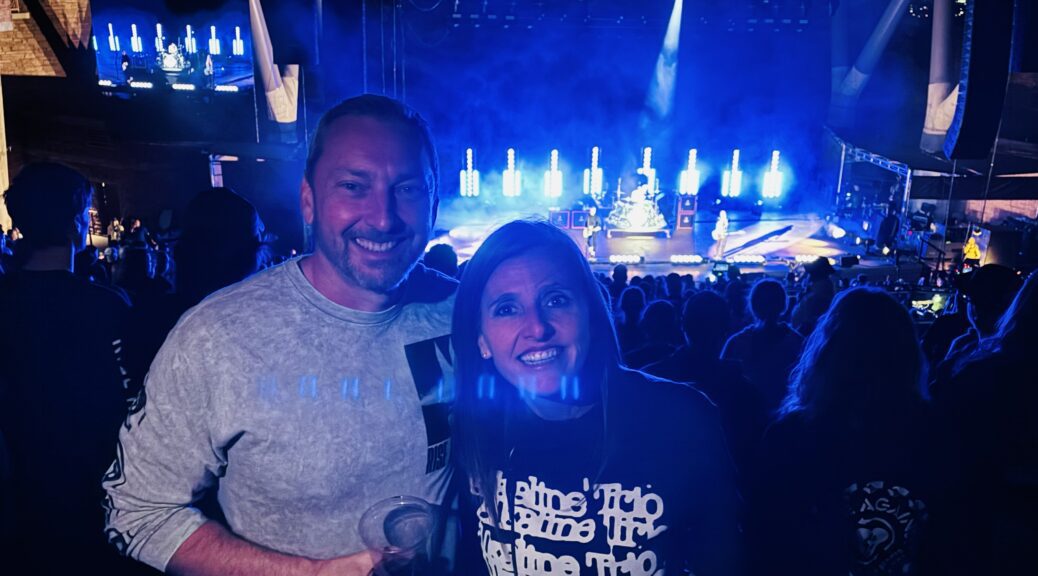
With sleep patterns still not settled, we were up earlier than we should have been following the high adrenaline preceding evening at the concert at Red Rocks Amphitheatre in Denver. At least this meant we could have a laze, catch some morning show TV, get a run in the gym and then tackle the unenviable task of packing up. We collected our rental car from Avis and hit the road in our very comfortable Mazda CX50 to tackle our epic roadtrip from Denver to Chicago.
The first experience for the day was a whistle-stop in Fort Collins. It had been a ‘maybe’ on the route planning, but deal was sealed after so many mentions in the concert the previous night. If it was good enough for Rise Against, who were we to pass it up?! The write-ups had shared that the town was the inspiration for Main Street at Disneyland, with its quaint Victorian buildings and alluring framed-glass storefronts. We doubled the visit with a breakfast snack; a warm and gooey cinnamon bun from the legendary Silver Grill Cafe that had been serving patrons fresh baked goods and other traditional diner fare since 1933! We enjoyed our bun on a street side bench to take in the quintessential pretty little American town.
Leaving Colorado, we came to Cheyenne (Wyoming). The theme for this visit would be boots, boots, boots. First a stop-in at Boot Barn for the elusive Ariat Fatbaby boots I had been after. We picked the wrong branch and were directed to the big Wrangler store in the town centre. Unfortunately we fared no better, but fortunately we weren’t out of our way because the other mission was to find one of the 35 giant cowboy boots art pieces around town for a photo opp. There were not one but two giant cowboy boots opposite Wrangler, which eased the pain somewhat.
We had another 55 or so miles to get us to Chugwater (Wyoming) for lunch. We’d chosen the Chugwater Soda Fountain as famous since 1914 for its chilli and milkshakes! Open road and easy drive; we were hungry when we got to the tiny pinhead town – population 175, according to the welcome sign. Sadly, we found when we got there that the diner was closed on a Tuesday. Argh! A quick Google revealed that the gas station and rest stop at the entrance of the town stocked the Chugwater Chilli as a takeaway, so we gave it a try. True to the review, there was an urn of classic ground beef chilli and another of green chilli chicken soup. We got a portion of each and sat at the tables outside to enjoy our roadside meal. Humble as it was, both meals were incredible. Meaty, spicy and packed with flavour.
With renewed energy, we got back in the car to crack the back of the long drive toward the South Dakota border, stopping only briefly in Lusk for a quick photo of the authentic pioneer wagon outside the Stagecoach Museum. Other than that it was miles and miles and miles and miles of open road. Flat, straight, with absolutely nothing on either side but golden brush. And when I say nothing, I mean nothing. When we exited one of the little towns that our national highway cut through, there was a sign that said ‘no services for 81 miles’ and, if anything, that was an understatement.
We arrived in Custer (South Dakota) in the early evening. We checked into the Comfort Inn and grabbed some extra layers as the temperatures had dipped considerably. Although only a few hundred metres from town, we drove to find dinner because it was cold, dark and the humidity so high that the misty cold felt like rain even though we weren’t getting wet.
Good thing we hadn’t delayed. The few restaurants in the Main Street, Mount Rushmore Road, that were open (some closed for the season, others only opening on weekends), were full. We counted ourselves lucky to get the last seating at Pizza Mill, and were served the most magical crusty, cheesy, meaty, doughy delight a short while later. Counting our blessings we closed the night early, with the rest of Custer.
WEDNESDAY
The hotel breakfast sitting closing at 9am was all the motivation we needed to get up and out early. The hotel had a gym so we could have a trot on the treadmill to work up an appetite for the buffet, making space for a cream cheese bagel or a cinnamon waffle with syrup and bacon.
Sadly the morning was a repeat of the previous night’s moody mistiness. We optimistically drove up to the Crazy Horse Memorial anyway, but the attendant told us we would be wasting the $12 a head to see nothing behind the foggy curtain. We were disappointed to miss seeing this masterpiece in the making, having read its unusual story.
The memorial was initiated in 1948 by Lakota Chief Henry Standing Bear as a colossal mountain carving tribute to the spirit of the Native Americans. Because the project expressly rejects government funding, the warrior is being carved slowly but surely by successive generations and promises to be the world’s largest sculpture when it’s finished. Which will be nowhere near our lifetime since the 87 foot-tall face completed in 1998 is only 1.7% of the final sculpture. The last 25 years have seen progress on Crazy Horse’s outstretched left hand and arm. While improvements in technology have helped up the pace, the next major milestone for 2037 aims to deliver Crazy’s shoulder and hairline and his horse’s head and mane. The final 563 x 641 foot design featuring the rest of the horse’s body is projected loosely as ‘many more decades or generations to complete’. Crazy indeed.
The attendant had warned to expect the same at Mount Rushmore National Memorial, but as one of the main attractions of this tour that we had built the itinerary around, we had to give it a go. It was worth the risk. Even though only 20 mins down the road, the mist had lifted a lot by the time we got there. We paid our $10 and parked, bracing the cold to walk up to the entrance.
An absolute win. Although still cloudy and overcast, we had a perfect view of the famous four faces on the cliff face in front of us, framed by the Avenue of Flags walkway to the viewing point. Fourteen years of dynamite blasting and nearly 400 hard-graft craftsmen had created this manmade beauty that was unveiled in October 1941. We learned that the State Historian had originally envisaged carving Western heroes like Buffalo Bill to drive tourism, but the sculptor, Gutzon Borglum, rejected the idea in favour of a more grand monument.
He selected 4 presidents to reflect the first 150 years of American history:
- George Washington = Birth. As first president and leader of the revolutionary war, he laid the foundation for democracy.
- Thomas Jefferson = Growth. He authored the Declaration of Independence and signed the Louisiana Purchase in 1803, doubling the size of the country overnight.
- Theodore Roosevelt = Development. He oversaw massive economic boom, pushed for corporate trust-busting, spearheaded the Panama Canal and fiercely protected public lands.
- Abraham Lincoln = Preservation. He held the country together during the Civil War and abolished slavery.
Since we had seen loads of banners and flags in several towns along our road trip commemorating America’s 250th birthday, and since Mount Rushmore celebrated the first 150 years of American history, it was a worth question to ask why no more faces had been added since – or were planned now to cover the last 100 years. A bit of research revealed a little about preserving the integrity of a completed artwork… but mostly that geological instability was prohibitive. The granite rock around the current faces was highly fractured and unstable, and in 1941 when the project was closed it was then declared that there was no more carvable rock left. In fact, Jefferson was supposed to be on the left of Washington but the rock crumbled so badly that they had to blast him off and squeeze him between Washington and Roosevelt.
It’s comforting that Mount Rushmore National Monument is destined to remain as it is. In a world so dominated by sensational news and progressively less refined presidents, it would be a shame if the grandeur of the current carvings was diminished by adding a legacy not worthy of preserving.
We stopped for a spot of lunch at the Cedar Pass Lodge diner in the Badlands National Park. A hearty bison chilli (with mixed beans, like what we would call a con carne) and a bison taco that was made with a fresh legit local corn shell. Just what the doctor ordered, so washed it down with a Dr Pepper.
Driving through the Badlands was a masterclass in the forces of nature. You could see on the epic and endless ripples of rock how millions of years of extreme environmental shifts had carved the alien landscape from ancient sediment. The region had transitioned from a warm inland sea to a tropical floodplain, eventually leaving behind a massive layer cake of black ocean mud, yellow mounds and white volcanic ash. About a half a million years ago, powerful rivers then began slicing through the soft clays, with heavy rains rapidly sculpting the steep spires, deep canyons and jagged ridges seen today.
For 19th century pioneers heading west, the area served as a terrifying physical barrier that could effortlessly shatter wagon wheels. The labyrinth of hidden ravines and maze-like canyons were nearly impossible to navigate unless you knew the hidden paths, which turned the area into a lawless haven for livestock thieves, horse rustlers and outlaws evading justice. And if they survived all that, most settlers found the land unlivable because the soil was poor, the rainfall scarce and a single storm could wash away a crop. Most abandoned the free claims they were given by the US government, leaving behind ghost towns.
Perhaps the pioneers were just a bit ahead of their time. The soft clay continues to erode at about an inch per year – as compared with an inch per 10,000 years for the likes of the Black Hills where Mount Rushmore sits – from the intense summers, freezing winters and constant prairie winds. So scientists estimate that badlands will be a flattened level terrain in another half million years. Hopefully the Crazy Horse monument is finished by then too.
We were travelling from West to East so lost an hour as we crossed time zones. Consequently, we arrived at the Thunderbird Lodge in Mitchell (South Dakota) early evening instead of late afternoon. It was still cold and already dark so we wasted no time in getting down to the town’s main tourist attraction, “the world’s only Corn Palace“. The building served as a theatre, basketball arena (hosting the high school Kernels and their mascot Cornelius) and event venue, offering free entrance to view the exhibitions in the lobby that proudly described the town’s history.
The murals outside the Corn Palace are redecorated every year. The nine murals represent a new theme each year, determined by the Corn Palace Board. Mural designs take approximately 250,000 ears of corn to complete and costs around $150,000. Decorators use 60 acres of corn, 12 colours in total, with over 10 acres of rye, sour dock and other native grasses. Each ear is cut in half lengthwise and nailed in place. The murals at the front entrance were in the process of being replaced so we could see ‘behind the curtain’ how the mural was sketched onto a white sheet with requisite colours noted, like a paint-by-numbers.
We dined in the adjacent restaurant, Bradley’s Pub and Grille, where we feasted on a game-day selection of chilli soup, chislic (deepfried salted steak cubes native to South Dakota), breaded shrimp, boneless chicken wings and chilli fries with the baseball in the background on the big screen TVs.
THURSDAY
Waking to a cold and grey rainy day, we had a very sugary kickstart in the motel’s breakfast bar. Cheerios cereal, 2-bite brownies and Pop Tarts which, after a minute in the toaster, taste a bit like hot Iced Zoo biscuits with jam in the middle. We had another long drive ahead of us so after another turn past the Corn Palace to appreciate the murals in the daytime, we hit the I-90 East.
It was a pity about the weather because our first stop was intended to be a walking tour in Sioux Falls. An app called GPSmyCity offered a 3.8km route starting at the falls and then around the downtown sites, with narrative about all the stops. A brisk walk in the single-digit cold would have been one thing, but in the rain something entirely less appealing.
We made do with a stop at the Visitors Centre at the Falls, with an elevated viewing deck for some great pics of the full falls, and walking paths and a bridge around and over the falls for a close-up experience. The short trail had sign boards that unfolded the story of the Sioux Falls for us.
Formed roughly 14,000 years ago during the last Ice Age, the waterfalls of the Big Sioux River were shaped as glacial meltwaters carved through layers of durable pink Sioux Quartzite rock. For millennia the drastic cascade served as a gathering and trading hub for indigenous people, including the Cheyenne and Dakota tribes. The European history only began much later when rival pioneers from Iowa and Minnesota arrived almost simultaneous in 1857 and both staked claims to the falls. Realising they had shared vulnerability on the remote prairie, they united to construct Fort Sod.
The initial settlement was short lived with the outbreak of the Dakota War in 1862, which forced evacuation of the tiny village that was subsequently pillaged and burnt. The US Army pulled in 1865 to create a secure homestead to encourage return and rebuild. The arrival of the railroad in 1878 and construction of the massive Queen Bee water-powered mill in 1881 contributed to the transformation of the frontier outpost into the largest commercial hub of the Dakota Territory – and even became famous as the ‘divorce capital’ during the late 19th century for its modern and liberal laws.
Soon we were back in the car and cruising down the Interstate 90 and into Southern Minnesota to see the Jolly Green Giant Statue in the tiny town of Blue Earth. Standing a towering 55.5 feet tall and weighing 8,000 pounds, the fibreglass marvel was pure unadulterated Americana celebrating the town’s vegetable-canning heritage. JGG fans can walk right up to his leaf-clad legs for an epic photo and track down his 24 “Little Sprout” sidekick statues hidden around town. The adjacent museum tells the story of the century of Jolly Green Giant canning business history and has a surprisingly generous selection of nostalgic veggie themed swag for enthusiastic fans to purchase.
Sticking to the theme, our next stop was at the SPAM Museum in Austin, Minnesota. As a celebration of the legendary Hormel canned meat products, comprising ham and pork shoulder blended potato starch and seasoning. Known affectionately as the “Guggenheim of Pork”, the museum features whimsical exhibits like a mock assembly line where you can race against the clock to can your own SPAM, a 12-foot rocket ship made of SPAM cans and a gallery detailing how the mystery meat became a vital fuel source for Allied troops during World War II. We were delighted to be offered baking-hot samples served on bite-sized pretzel toothpicks by a SPAMbassador, and favoured the Hickory and Original flavours.
Lunch, by contrast, was one of the healthier diners. Just a block away from the SPAM Museum, The Tendermaid has been an Austin institution since 1938. The retro burger joint is still the original U-shaped counter with about 20 red diner stools framing the small work area in the middle that houses the custom steam cabinet where the burger is made. The house speciality is the midwestern art of the loose-meat burger – a crumbly mound of non-patty heaped on a bun that is steamed atop the burger meat in the cabinet so it’s soft and burger-infused. The plain burger meat is slow-cooked in the steam cabinet, continuously stirred, strained or grease and splashed with water to keep it moist until it’s heavily seasoned right on the bun. Because the meat inevitably tumbles out of the bun, the meal is served with a spoon. To keep the focus on the star of the show (and because the diner is so compact), they don’t serve fries, insisting rather that a milkshake is the ideal accompaniment. Which is was!
The rain continued on our last segment of driving for the day, and showed no sign of letting up when we crossed the state line into Wisconsin. We took the bridge over the great Mississippi River to get to La Crosse, to check into the Gundersen Hotel and Suites for the night. We attempted to head out on foot for a close up of the river en route to town, but it was very cold with the light rain so we turned back and Ubered instead.
The weather didn’t dampen the downtown spirit at all and we seamlessly paired our fancy riverfront wine tasting with a happy hour beer at a dive bar. Embracing Wisconsin’s title as “America’s Dairyland”, with cheese as its official state dairy product, we sought a cheese-themed supper. The Crow sports bar helped us with that, offering us a healthy portion of deep-fried cheese curds (we Googled a lot and I’m still not entirely sure what cheese curds are… but they’re delicious!) and a Mac of the Day special, garlic and Parmesan mac ‘n cheese.
FRIDAY
After omelettes and kielbasa breakfast from the hotel buffet, we braved the cold to get an unmissable photo in town – The World’s Largest 6-Pack of beer. Originally constructed in 1969 by the Heileman Brewing Company to showcase their flagship Old Style Lager, the six colossal 40-foot tall storage tanks hold 2.5 million litres of beer. Optimally drinking temperature too, I’d imagine, since Wisconsin is like one big fridge!
With a relatively easy 2.5 hours drive for the day, we could generously allocate time to random Americana and kitsch-but-cool landmarks. Since we had managed quite a few ‘Welcome to…’ state signs along our great trek on the I-90, we aimed to track down a Wisconsin one. We struck gold just across the Mississippi River, with a roadside sign that offered a safe stop and classic snap.
Then it was on to the giant fibreglass statue graveyard, which was like a mass grave of Americana. We didn’t recognise many of the characters, but there were some obvious ones like a giant baseball mitt and a massive doughnut that must have been recently retired because it was still bright yellow and branded.
The Mousehouse Cheesehaus then doubled as an instant education in cheese and a light lunch. There was every flavour of cheese you could imagine and the servers were eager to cut tasters and talk about what to pair with the bacon cheddar or when to eat the beer cheese. Highlight was the selection of cheese curd, native to the region. We had sampled deep fried cheese curd the night before, but now had endless flavours and formats at our disposal. How delightful to learn that authentic curd should squeak against the teeth. We still don’t really know what curd is and how it’s made… but we had a feast of a time not learning that!
It was really really cold by the time we got to Stoughton, Wisconsin. Not wanting to be in the bustle for the last night of our trip, we had bypassed Madison to stay in this suburban extension to the south of the city. With a quaint downtown (that should have been) walking distance from our hotel, we had intended to spend the late afternoon strolling into town for our last supper. It was too cold for that so we cheated and took an Uber instead.
The cute high street looked exactly like the ones in every middle America TV series. A wide road lined with Victorian brick buildings, neat as a pin and big welcoming warmly-lit glass window displays showing off baked goods, cheeses, wines, toys, books, board games… all very wholesome goodness. The only difference with this little town was the notable presence of Norwegian flags alternating with the American ones, flying from the pole of each streetlight. For some reason there had been a flood of immigrants to this town 150 odd years ago – perhaps the weather reminded them of home – so the tangible acknowledgement of the heritage was paying homage to the lineage of many of the townsfolk.
We walked the length of town and back again, much quicker than we had planned to. We had booked the traditional Friday Night Fish Fry at a traditional Supper Club, but that was only in a couple of hours time. That’s when we found the Viking Brew Pub. Famed as much for the giant Viking ship bar as the pub grub and good vibes, it was an easy hour sampling the Oktoberfest speciality craft beers and sneaking in a portion of battered cheese curds.
The last stop was then a visit to the local Mershon’s Cidery since apples were a major produce for the region. I sampled the local red wine, which was a reasonable berry-forward offer. Chris didn’t fare quite as well, but braved his very intense cider with such enthusiasm that the owner gifted him a shot of their homemade brandy (that smelt like paint-stripper!)
Closing off the evening – and the road trip – with a meal at Water Street Tavern was a fabulous idea. We made it a pseudo-celebration since we’d missed sharing Chris’s actual birthday the week before. The starter clam chowder and french onion soups were perfect to warm us up on arrival. Fulfilling the local fish fry traditional made experiencing the local fresh water walleye and bluegill fish an obvious choice. And the exceptional chocolate cake was a fitting finish. The lovely people at the restaurant gave Chris a token for the vintage cigarette machine that had been converted into a dispenser for local art and our new little pottery Scrat will be a lovely reminder of a lovely trip.